


Bengaluru: A Global Hub for Space Operations
In early April 2026, Bengaluru became the epicentre of the global space community as it hosted the International Conference on Spacecraft Mission Operations, or SMOPS-2026. Jointly organised by the Indian Space Research Organisation (ISRO), this event
brought together the world’s leading space agencies, tech startups, and academic minds. The goal was to tackle the biggest challenges in managing the thousands of satellites orbiting our planet. The choice of Bengaluru was significant, as the city is home to ISRO's headquarters and its vital Telemetry, Tracking and Command Network (ISTRAC), the nerve centre for India's space missions. The conference wasn't just a discussion; it was a clear signal of India's rising prominence in the global space-tech industry.
The Unsung Heroes of Orbit
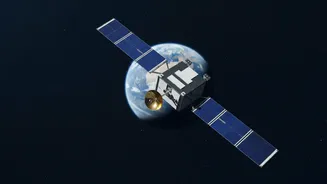
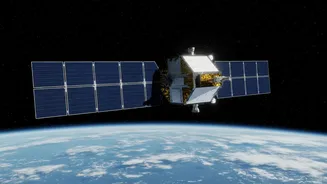
We rarely think of orbit as a busy place, but it's becoming increasingly congested. With over 10,000 active satellites and a growing cloud of orbital debris, the risk of collision is a constant threat. A key theme at SMOPS-2026 was the critical need for 'space domain awareness'. This is the difficult job of tracking every object, predicting its path, and maneuvering satellites out of harm's way. It is a high-stakes, 24/7 operation performed by engineers on the ground. These are the invisible traffic controllers of space, ensuring our vital infrastructure doesn't get knocked out by a stray piece of space junk or another satellite. Their work is what makes long-term missions, from communication services to deep space exploration, possible.
Managing the Rise of Mega-Constellations
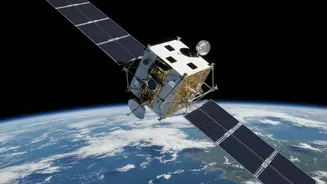
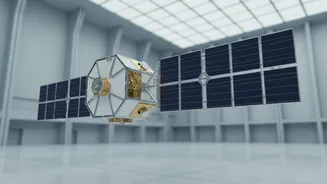
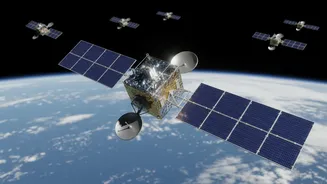
One of the most pressing challenges discussed at the conference is the management of so-called 'mega-constellations'. These are massive networks of hundreds or even thousands of small satellites working in unison, often to provide global internet coverage. While they promise revolutionary connectivity, they present unprecedented operational headaches. Managing the launch, deployment, and coordination of such a large fleet is a monumental task. Experts at SMOPS-2026 explored innovative strategies for automating the management of these constellations, ensuring they operate efficiently without interfering with each other or adding to the space debris problem.
Artificial Intelligence Takes the Controls
How do you manage thousands of satellites at once? The answer, increasingly, is artificial intelligence. A major focus at SMOPS-2026 was the pivotal role of AI and machine learning in modern space operations. ISRO Chairman V. Narayanan noted that AI is no longer a theoretical concept but a practical reality in mission engineering. AI algorithms can process vast amounts of data from satellites, predict potential problems, and even perform autonomous course corrections. This human-machine synergy is essential for managing the growing complexity of space traffic and enabling more ambitious missions to the Moon, Mars, and beyond with greater efficiency and safety.
The Critical Work on the Ground
For every satellite in orbit, there is a dedicated team on Earth working around the clock. The 'ground segment'—a network of control centres, tracking stations, and engineers—is the backbone of any space mission. ISRO's ISTRAC, which played a leading role in organising SMOPS, is a perfect example. This facility and its personnel were behind the flawless execution of landmark missions like Chandrayaan-3 and Aditya-L1. The conference highlighted the need for continuous innovation in ground systems, from upgrading antennas to developing smarter software that can handle the data deluge from next-generation satellites and protect these vital systems from cybersecurity threats.