









The New Workplace Anxiety
For the generation entering the workforce alongside a tidal wave of AI, career certainty is a luxury of the past. Recent reports show a significant portion of young professionals believe AI will fundamentally reshape their jobs. This isn't just a vague
fear; it's a calculated assessment of a changing landscape. A 2026 report from the International Workplace Group (IWG) noted that the convergence of AI adoption, rising living costs, and the gig economy is causing Gen Z to completely rethink traditional career paths. They see AI automating routine tasks, particularly those in entry-level roles, and understand that standing still is the biggest risk of all. This has fostered a proactive, rather than passive, approach to career management.
From Degrees to Dynamic Skills
The traditional reliance on a university degree as a lifelong career pass is fading. Today, the focus is on a dynamic, ever-evolving skill set. According to a recent Deloitte survey, over 90% of Gen Z and millennials in India are already using AI tools in their day-to-day work, particularly for learning and development. This hands-on engagement shows a generation that is not just learning about AI, but learning with it. LinkedIn data reveals that Gen Z professionals in India are dedicating significantly more time to learning AI skills compared to older generations. They recognise that to stay relevant, they need a portfolio of abilities that align with what the market demands right now, from hard technical skills to uniquely human capabilities.
The In-Demand Skill Set
So, what skills are considered valuable insurance? The answer is twofold. First, there is a clear demand for technical AI-related competencies. Skills like machine learning, data science and analytics, cloud computing, and Generative AI are topping the list for employers. However, the second part of the equation is just as critical: soft skills. As AI handles more technical and repetitive tasks, human capabilities like creativity, critical thinking, collaboration, and leadership become more valuable. HR leaders have noted that failing to prioritize these human skills is a risk to innovation, as empathy and leadership are abilities AI cannot replicate. Gen Z appears to be balancing this, with many focusing on digital expertise while understanding the long-term value of strong interpersonal skills.
The Rise of the 'Portfolio Career'
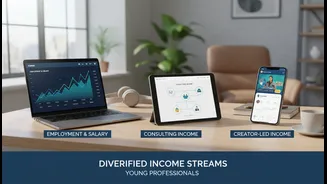
This drive to upskill is also fuelling a major shift away from the single, linear career path. The concept of a "portfolio career," which combines a primary job with freelance work, side hustles, or entrepreneurial ventures, is gaining massive traction. Recent findings show that only 16% of Indian Gen Z professionals want a single full-time job, while 43% combine their main role with a side hustle. Upskilling directly enables this trend. Acquiring new skills in areas like digital marketing or data analysis doesn't just make them better at their day job; it opens up new income streams and provides a safety net if one role is impacted by economic or technological shifts. It's a strategy of diversification, applying the principles of a financial portfolio to one's professional life.