




The Allure of a Watery Moon
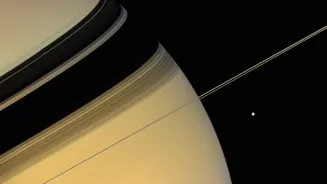
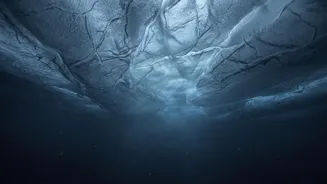
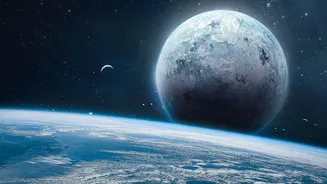
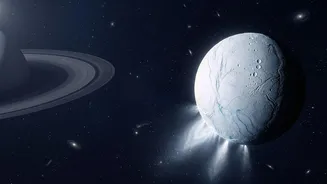
For years, Enceladus has captivated scientists. This relatively small, 500-kilometre-wide moon of Saturn is covered in a thick crust of ice. However, beneath that frozen shell lies a global ocean of liquid saltwater. The most tantalizing evidence of this
hidden ocean comes from gigantic plumes of water vapour and ice grains that erupt from fractures near the moon's south pole, spewing material hundreds of kilometres into space. NASA's Cassini spacecraft flew through these geysers, detecting salts and organic compounds—the basic chemical ingredients for life. Data also pointed to hydrothermal vents on the seafloor, similar to those on Earth that support entire ecosystems without sunlight. This makes Enceladus one of the most promising places in our solar system to look for life.
Recreating an Alien Ocean in the Lab
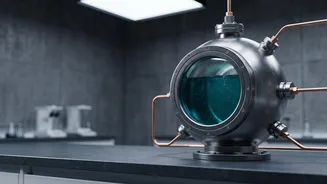
While the ingredients for life seem to be there, the question remained: could anything actually live in such an environment? To find out, researchers designed an experiment to mimic the conditions of Enceladus's ocean. Based on Cassini's data, they created a concoction with little oxygen, high concentrations of carbonates, and a very alkaline pH of up to 11—far more alkaline than most organisms can tolerate. They also added powdered minerals to simulate the rock-water reactions believed to generate hydrogen gas at hydrothermal vents on the moon's seafloor. Into this harsh, alien brew, scientists introduced a specific type of Earth microbe: Methanothermococcus okinawensis. This single-celled organism, a type of archaea, was originally found near deep-sea hydrothermal vents in the waters off Japan. It's a methanogen, meaning it survives not on oxygen or sunlight, but by converting hydrogen and carbon dioxide into methane.
Thriving Against the Odds
The results of the experiment surprised even the scientists. Not only did M. okinawensis survive in the simulated Enceladus ocean, it thrived. The microbes successfully grew and reproduced, producing methane as a byproduct. Remarkably, they managed this even at a pH of 11, far beyond their previously known limit. The organisms adapted their metabolism to cope with the very low levels of available carbon dioxide, efficiently using the hydrogen that was naturally produced by the water-rock reactions in the lab setup. “This was really a surprise to us,” said Nozair Khawaja, a planetary scientist who contributed to the study. “This was an experiment for which we did not expect such a successful outcome.” The study demonstrates that a known Earthly metabolism could function in the strange chemical environment of Enceladus.
Methane and the Hunt for Biosignatures
This finding is particularly exciting because Cassini previously detected methane within the plumes of Enceladus. While there could be non-biological explanations for its presence, this new research provides a plausible biological pathway. The fact that a methanogen could be responsible for the moon's methane signature strengthens the case that Enceladus is not just habitable, but potentially inhabited. This study removes a key barrier to the moon's potential viability for life. It doesn't prove that life exists there, but it provides a clear, testable hypothesis. If life did arise on Enceladus, it might resemble these tough, methane-producing microbes from our own planet's deep oceans. The link between the lab-grown microbes and the moon's observed chemistry makes the search for these biosignatures a top priority for future missions.
From the Lab to Deep Space
This laboratory success story has major implications for the future of space exploration. It reinforces the idea that Enceladus is a prime target for astrobiology missions, such as the proposed Enceladus Orbilander. Because the moon conveniently ejects samples of its ocean into space, a future probe wouldn't need to land and drill through kilometres of ice. A related study found that the way the ice grains are ejected actually concentrates certain chemical compounds, which could make signs of life easier to detect than previously thought. With technology already available, a mission could analyze these plume particles and potentially identify definitive biosignatures. This new evidence sharpens the focus for scientists designing these future missions, giving them a better idea of what to look for and boosting hopes that we may one day answer the question of whether we are alone in the solar system.