




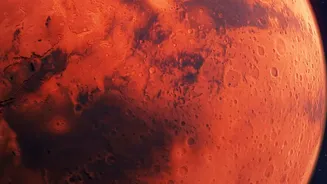
A Planet of Contradictions
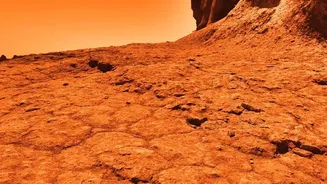
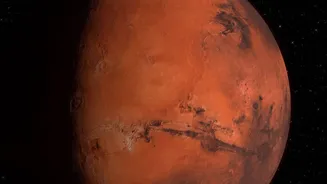
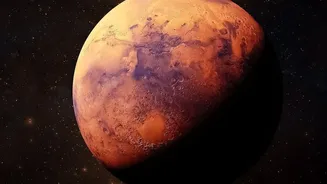
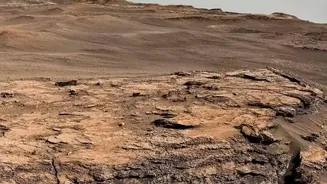
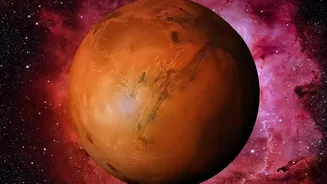
For decades, scientists have grappled with the Martian climate paradox. Geological evidence left by rovers and orbiters paints a picture of a world that was once warm and wet enough for liquid water to carve canyons and fill craters. Yet, our understanding
of the early solar system suggests a problem: the Sun was only about 70% as bright as it is today, which shouldn't have provided enough energy to keep Mars from being a global snowball. While theories about thick greenhouse gas atmospheres have been proposed, they often fall short of fully explaining the geological features we see. The Red Planet's history has seemed to be a series of contradictions between a cold, icy reality and short, warm, wet periods.
The 'Magma Highway' Hypothesis
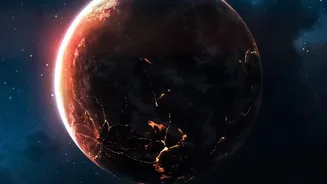
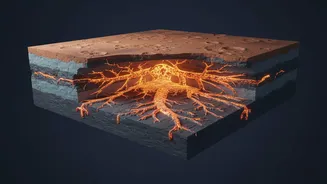
New research, based on seismic data from NASA’s InSight lander, offers a different solution that works from the inside out. A study published in June 2026 suggests that early Mars didn't have simple, isolated volcanoes, but rather enormous, interconnected systems of magma deep within the crust. These vast plumbing networks, dubbed 'transcrustal magmatism', could have stretched for hundreds or even thousands of kilometres. Rather than heat being concentrated in single volcanic plumes, this model proposes a sprawling network that could move and distribute heat and chemically evolved materials across large regions of the planet’s northern hemisphere.
How It Reshaped Mars
This concept challenges the long-held belief that complex geology, like that seen on Earth, requires plate tectonics. Mars is a 'stagnant lid' planet, meaning its crust is one solid piece. On Earth, moving plates drive volcanism and recycle elements, processes considered crucial for developing a stable, habitable climate. The magma highway model suggests Mars found another way. By creating these extensive, interconnected systems, the planet could internally recycle materials, allowing molten rock to evolve chemically and create a more complex crust. This process would have been vital for moving heat toward the surface and releasing gases that could have temporarily thickened the atmosphere, creating pockets of warmth without needing to heat the entire globe.
Creating Cradles for Life
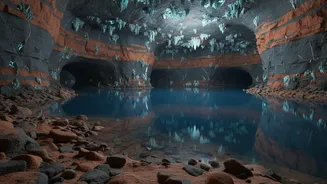
Perhaps the most exciting implication of this theory relates to the search for extraterrestrial life. Instead of relying on a planet-wide warm climate, these magma highways could have powered localized, long-lasting hydrothermal systems. Think of them as Martian versions of Yellowstone's hot springs or deep-sea vents on Earth. These spots, where heated, mineral-rich water interacts with rock, are considered prime locations for the origin of life. They create stable, energy-rich environments shielded from the harsh surface conditions. This new model suggests that even if most of early Mars was freezing, these volcanically powered oases could have served as perfect, self-contained incubators for microbial life to emerge and thrive.