


1. Eye and Camera Safety is Non-Negotiable
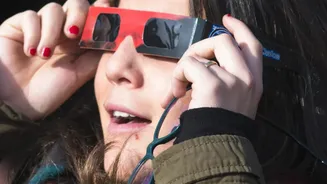
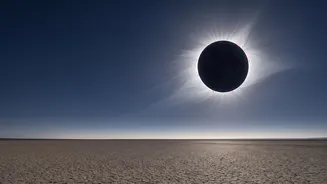
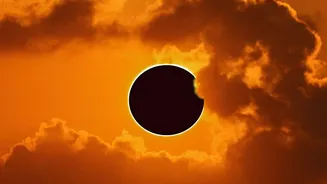
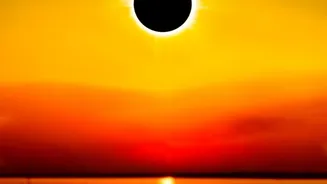
Photographing a solar eclipse is fundamentally a problem of safety. Never look at the sun directly, even during a partial eclipse, without proper eye protection. Standard sunglasses are not enough. You need certified eclipse viewers that meet the ISO
12312-2 international standard. Your camera requires its own protection in the form of a dedicated solar filter placed over the front of your lens. Pointing a camera at the sun without one can damage its sensor. Crucially, never look through your camera’s optical viewfinder when pointing it at the sun, as this can channel concentrated sunlight and cause severe eye injury. Use your camera's live view screen instead.
2. Choose the Correct Solar Filter
Not all dark filters are safe for solar photography. Standard photographic Neutral Density (ND) filters, even strong ones, are not sufficient as they may not block harmful infrared and ultraviolet radiation. You must use a filter specifically designed for solar observation, often labelled as a 16-stop ND filter or ND5, which blocks 99.999% of the sun's light. Look for filters or filter sheets that are explicitly ISO 12312-2 certified. These filters produce a clear, often orange or neutral white image of the sun, allowing you to see details like sunspots. They come in versions that screw onto your lens or as foldable cardboard models that fit over the lens barrel.
3. The Tale of Two Eclipses: Solar vs. Lunar
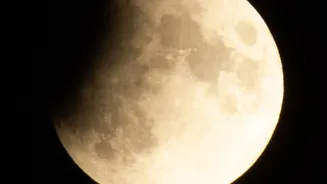
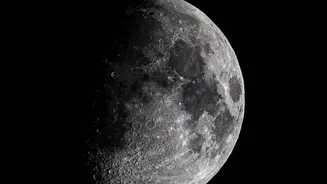
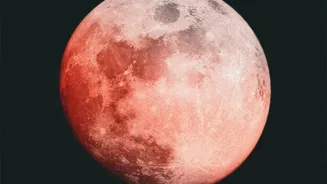
While a solar eclipse involves the moon blocking the sun, a lunar eclipse occurs when the Earth’s shadow falls upon the moon. Photographically, they are entirely different. A solar eclipse is about managing extreme brightness, while a lunar eclipse is a low-light challenge. You do not need any solar filter to photograph a lunar eclipse; it is perfectly safe for your eyes and camera. The main difficulty with a lunar eclipse is that the moon becomes dramatically darker as the event progresses, often taking on a reddish hue, requiring you to adjust your settings for diminishing light.
4. Essential Gear for Both Events
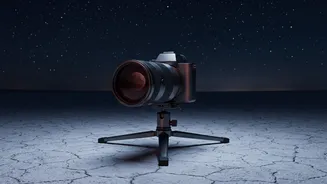
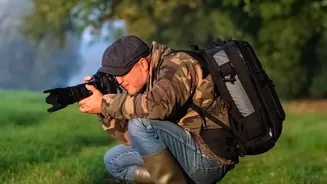
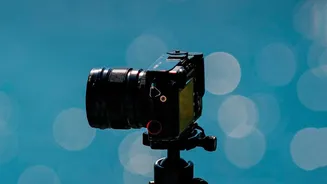
Beyond the critical solar filter for a solar eclipse, some gear is vital for both. A sturdy tripod is essential to keep your camera stable, prevent shake, and get sharp images, especially when using a long telephoto lens. A remote shutter release or using your camera’s self-timer will also help minimize vibrations. For a detailed view, a telephoto lens with a focal length of 300mm to 600mm is ideal for filling the frame. However, a wider lens can create a compelling landscape photo that includes the eclipsed sun or moon alongside a landmark. Finally, make sure you have fully charged batteries and empty memory cards.
5. Basic Camera Settings for a Solar Eclipse
With your solar filter securely attached, switch your camera to Manual mode. Start with your camera's base ISO (like 100 or 200) and a mid-range aperture like f/8. Shutter speed will vary depending on your filter's density, but a good starting point is between 1/250 and 1/1000 of a second. Take test shots of the regular sun on a clear day to find the best settings for your specific gear. The goal is to see detail on the sun's surface without it being a featureless white circle. Use exposure bracketing to take multiple shots at different settings to increase your chances of a perfect capture.
6. Basic Camera Settings for a Lunar Eclipse
As a lunar eclipse is a low-light event, your settings will be quite different. A tripod is still a must. Start with a low ISO, perhaps 100 or 200, and an aperture of f/8 before the eclipse begins. As the Earth's shadow covers the moon, it will get much darker. You'll need to compensate by increasing your ISO (to 800 or 1600) and using a wider aperture if your lens allows. Your shutter speed will slow down significantly, possibly to a full second or more during totality. Since the moon's brightness changes constantly, you will need to adjust your exposures throughout the event.
7. Practice, Plan, and Compose
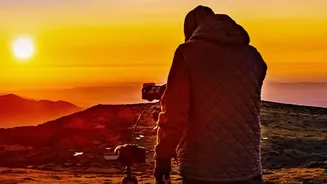
The best way to ensure success is to practice before the main event. Familiarize yourself with focusing manually on the moon or, with a solar filter, on the sun. Use your camera's live view and zoom in to ensure your focus is tack sharp. Plan your shot. A tight shot of the eclipse is good, but including a foreground element like a building or a tree can tell a more compelling story. Arrive at your chosen location early to set up and troubleshoot any issues. This preparation allows you to be more present and enjoy the spectacular view with your own eyes, not just through a lens.