


A Moment of Truth at Starbase
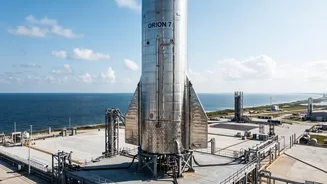
On November 14, 2026, after nearly 22 hours in orbit, the Starship upper stage, known as Ship 42, descended from the sky over Starbase, Texas. Following its launch the previous day, the spacecraft completed 14 orbits, deployed 26 Starlink satellites,
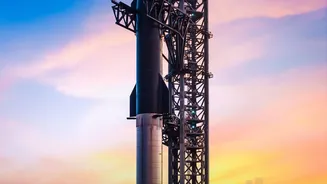
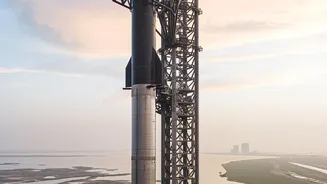
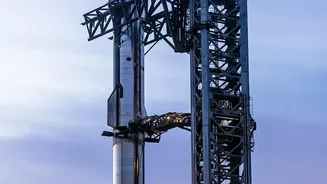
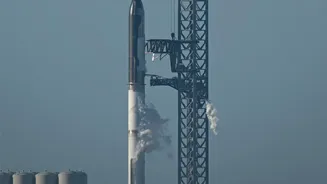
and survived a fiery reentry through Earth's atmosphere. Onlookers watched as the vehicle performed a 'belly flop' maneuver to slow down before flipping upright, igniting its Raptor engines, and steering itself with pinpoint precision toward the 146-meter launch tower. What followed was a maneuver once considered science fiction: the tower's giant mechanical arms, nicknamed 'Mechazilla' or the 'chopsticks', closed around the descending rocket, securing it in a clean catch. The plan was a partial success. While the Starship itself was caught, the mission's Super Heavy booster aborted its own tower landing due to a low fuel reading, diverting for a controlled splashdown in the Gulf of Mexico where it was destroyed.
The 'Chopsticks' Explained
The tower catch is a revolutionary approach to rocket recovery driven by a simple, radical idea from SpaceX CEO Elon Musk: put the landing gear on the ground, not on the rocket. Traditional rockets that land vertically, like SpaceX's own Falcon 9, carry the extra weight of landing legs on every flight. For a vehicle as massive as Starship, the legs would need to be enormous, adding significant mass that could otherwise be used for payload. By eliminating landing legs, Starship becomes a more efficient vehicle. The Mechazilla system consists of two giant, hydraulically-actuated arms on the launch tower. These arms don't squeeze the rocket's body. Instead, the Starship vehicle is equipped with small, strong anchor points or 'catch fittings'. As the rocket slows to a near-hover beside the tower, the arms swing into position, and the vehicle settles onto them, transferring its massive weight to the tower structure as the engines shut down.
The Holy Grail of Reusability
SpaceX commentator Dan Huot called the successful catch “the holy grail of spaceflight,” and for good reason. The primary goal of the Starship program is to create a fully and rapidly reusable transportation system to make interplanetary travel a reality. Catching the rocket with the tower is the cornerstone of this vision. A caught vehicle is already back at the launch pad, perfectly positioned to be placed back onto the launch mount by the same arms that caught it. This eliminates the lengthy and costly process of recovering a rocket from the ocean, transporting it back to port on a barge, and then moving it overland for refurbishment. The tower catch makes a rapid turnaround—re-stack, refuel, and relaunch, potentially within hours or days—a tangible possibility. Achieving this level of reusability is expected to fundamentally transform launch economics, dramatically lowering the cost of access to space.
What This Means for the Future
This successful recovery of a Starship from orbit is a huge milestone for SpaceX and its ambitious plans. Following the catch, Elon Musk was seen personally inspecting the vehicle's heatshield, noting that Ship 42 returned a 'motherlode of data' and looked to be in great condition. He estimated it could potentially be reflown after a few weeks of refurbishment, though he stressed that many small improvements are still needed to achieve the goal of airplane-like reusability with zero expected refurbishment. The achievement is not just a win for SpaceX but also for its partners, including NASA, which is relying on a version of Starship to land astronauts on the Moon for its Artemis program. This successful flight test brings the prospect of regular flights to the Moon and, eventually, Mars one giant leap closer. The data gathered from Ship 42's journey and recovery will be invaluable in refining the system for future flights, with the company aiming for weekly launches in the near future.