




The Race to Reuse
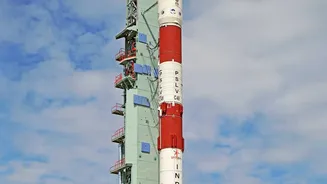
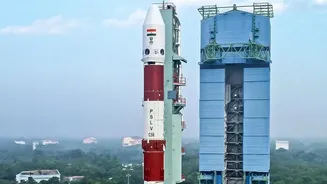
In the high-stakes world of space technology, launching a rocket is only half the battle. The new frontier is reusability, and Indian startups are officially in the race. Chennai-based Agnikul Cosmos has announced that its upcoming Mission-02 will attempt
to recover its orbital-class rocket booster, a first for India's private sector. This ambitious test involves not just sending a payload to orbit, but also guiding the rocket's most expensive component—the first-stage booster—back for a controlled landing on a barge in the ocean. This move signals a major escalation in the capabilities of India's burgeoning 'New Space' industry, putting it on a path to compete with global giants like SpaceX and Rocket Lab, who have already proven the immense value of reusable hardware.
Why Reusability Is a Game-Changer
For decades, rockets were designed to be disposable. The massive, powerful engines and complex structures, worth crores of rupees, were used for a single flight before being discarded in the ocean or burning up upon re-entry. This made space access incredibly expensive. Reusability fundamentally changes that economic equation. By recovering and refurbishing a rocket's first stage, a launch provider can slash the cost of a mission by up to 80%. Think of it like the difference between throwing away a commercial airliner after one flight versus refueling it for the next. SpaceX pioneered this model with its Falcon 9 rocket, which has flown hundreds of successful missions using recovered boosters. This has not only lowered costs but also enabled a much higher frequency of launches, making ventures like large satellite constellations economically viable for the first time.
The Players: Agnikul and Skyroot
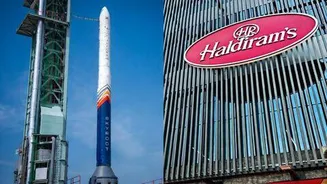
While several startups are part of India's private space boom, Agnikul Cosmos and Skyroot Aerospace are leading the charge on launch technology. Agnikul's Mission-02 is the most immediate test of a recovery system. Their Agnibaan rocket, powered by a single-piece 3D-printed engine, will be outfitted with landing legs, grid fins for steering, and independent navigation systems to fly itself back after stage separation. Hyderabad-based Skyroot Aerospace, which recently achieved India's first private orbital launch with its Vikram-1 rocket, is also developing its own reusable launch vehicles for the future. Both companies represent a new, agile, and commercially driven approach to space, moving far beyond the traditional role of private firms as mere component suppliers to ISRO.
A Supportive National Ecosystem
This private-sector push is not happening in a vacuum. It is the direct result of a strategic decision by the Indian government in 2020 to open the space sector to private enterprise. The creation of the Indian National Space Promotion and Authorisation Centre (IN-SPACe) established a single-window agency to promote, authorise, and supervise private space activities. This body facilitates access to ISRO's world-class testing facilities, expertise, and infrastructure, creating a nurturing environment for startups. This public-private partnership is seen as crucial for accelerating innovation and helping India capture a larger share of the global space economy, which is projected to exceed a trillion dollars by 2030.
The Challenging Road Ahead
Attempting to recover an orbital-class booster is an immense engineering challenge. The process involves withstanding extreme temperatures and aerodynamic forces during re-entry, followed by a series of precise engine burns to slow the vehicle for a soft landing on a moving target. Success is far from guaranteed on the first attempt. However, the mission itself is a critical testbed for the guidance, propulsion, and control systems required for reusability. Even a partial success would provide invaluable data. Beyond just recovering the booster, Agnikul also plans to turn the rocket's upper stage into an in-orbit platform for experiments, rather than letting it become space debris. This innovative approach demonstrates a commitment to not just cost-effectiveness, but also sustainability in space operations.