






The $100 Billion Bayou Vision
SpaceX, alongside Louisiana state officials, recently unveiled a proposal for what could be the world's largest spaceport in Vermilion Parish. Dubbed "Starbase, Louisiana," the sprawling 125,000-acre complex is designed to be a self-sustaining hub for the company's
future operations. The plans are monumental, calling for five launch complexes with a total of ten launch pads, on-site propellant production, power generation, and even an airport. With a projected investment of $100 billion, the facility is intended to support thousands of launches annually and is expected to create over 3,000 direct jobs. Construction is slated to begin in 2027, with the first launch from Louisiana soil targeted for 2029.
The Starship Equation
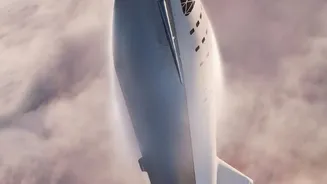
The Louisiana plan is not for SpaceX's current workhorse, the Falcon 9, but for its next-generation vehicle: Starship. As the largest and most powerful rocket ever built, Starship is designed to be fully and rapidly reusable. This is the core of SpaceX's strategy to make spaceflight as common as air travel. Unlike previous rockets, the goal for Starship isn't just to launch and land, but to do so with incredible frequency. The Louisiana facility only makes business sense if SpaceX is launching thousands of Starships a year, a scale that would overwhelm its existing sites in Texas and Florida. The entire economic and logistical model of the new spaceport is built on the assumption that Starship will become the backbone of a high-volume launch business, deploying everything from internet satellites to future Mars cargo.
Defining 'Operational Scale'
The phrase "operational scale" is key. For Starship, this means moving beyond its current phase of experimental test flights into a state of routine, reliable service. CEO Elon Musk has floated staggering numbers, suggesting an eventual goal of launching a rocket every hour. While that may be a distant target, the Louisiana spaceport is designed to enable a cadence of up to 30 flights per day. Reaching this scale requires more than just a successful launch; it demands proven reusability, rapid turnaround times between flights, and an industrial production line that can build and maintain a large fleet of rockets. The challenge is immense, as Starship is still under development, working to validate its core systems. The promise of thousands of launches a year is a world away from the handful of test flights conducted so far.
Why Louisiana Makes Sense
If Starship does achieve its desired launch rate, a third major site becomes a necessity, and Louisiana offers several strategic advantages. Its coastal location provides clear trajectories over the Gulf of Mexico for launches. The state's deep industrial roots in the oil and gas sector mean there is an existing workforce skilled in complex infrastructure projects, as well as an abundance of natural gas, a key component of Starship's fuel. Furthermore, the proposed site is enormous, providing a buffer zone for frequent launch operations and room for self-contained infrastructure, which is critical for the logistics of fueling thousands of flights. Building propellant production facilities on-site would avoid the massive transportation burden of trucking in liquid oxygen and methane for every single launch.
Hurdles on the Horizon
Despite the excitement, the path to Starbase, Louisiana is long. The primary hurdle remains technological: Starship must first prove it can fly to orbit and be reused reliably. Beyond that, the project faces significant regulatory and environmental reviews. Building such a massive industrial complex on Louisiana's fragile and eroding coastline has already drawn concern from environmental groups worried about the impact on local ecosystems. SpaceX has stated its commitment to working with state agencies on coastal restoration as part of the project. However, before any ground is broken in 2027, the company must first demonstrate in Texas and Florida that its revolutionary rocket system is not just a prototype, but a dependable workhorse ready for industrial-scale operations.