




From Relays to Brains in the Sky
The traditional model of space operations is straightforward: a satellite collects vast amounts of data and beams it back to a ground station, where humans or computers analyze it and send new instructions. This process is reliable but slow, hampered
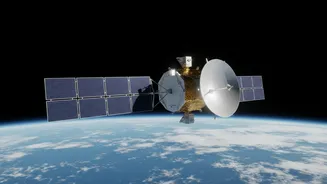
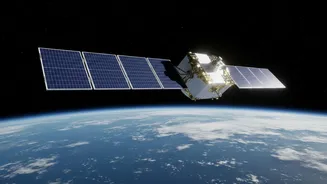
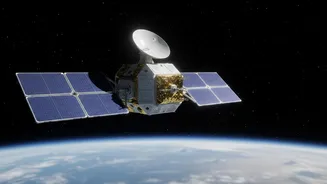
by communication delays and limited bandwidth. A high-resolution Earth-observation satellite can generate terabytes of data daily, but can only transmit a fraction of that during its brief contact windows with ground stations. The 'smart satellite' revolution, driven by edge computing, flips this model. Instead of just relaying raw data, these satellites process it directly in orbit using powerful onboard computers and artificial intelligence. This allows them to analyze information in real time, identify what's important, discard what isn't, and even make independent decisions without waiting for a command from Earth.
Why Now? The Drivers of Autonomy
Several factors are accelerating this shift. The miniaturisation and increasing power of computer hardware, including specialised AI chips, mean that immense processing power can now fit into the tight size, weight, and power constraints of a satellite. At the same time, the sheer number of satellites is exploding. With tens of thousands of new satellites projected to launch in the coming years, the old model of human-in-the-loop control is becoming an operational bottleneck. It's simply not possible to manage mega-constellations of thousands of satellites without a high degree of automation. This push is also a response to an increasingly contested space environment; autonomous satellites are more resilient and can continue their missions even if communication links are jammed or ground stations are compromised.
The Promise: Faster, Cheaper, and More Responsive
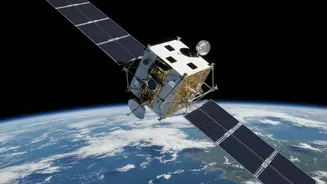
The benefits of this onboard intelligence are profound. For Earth observation, it means being able to detect and report on time-sensitive events like natural disasters or wildfires almost instantly, rather than hours later. By filtering data in space, satellites reduce the massive volume of information that needs to be sent to the ground, saving bandwidth and lowering operational costs. Autonomy also allows satellites to manage their own health, predict component failures, and navigate to avoid space debris without human intervention. A recent demonstration by the US Air Force Research Laboratory, where a neural network successfully assumed control of a satellite's orientation in orbit, marks a major milestone in proving these capabilities are no longer just theoretical.
Reading the Risks: Security, Errors, and Ethics
However, the headline's call for a "more careful reading" is crucial. Granting satellites more autonomy introduces new and complex risks. The most obvious is cybersecurity. If a satellite can make its own decisions, a hacker who gains control could command it to do anything, from spying to colliding with other satellites. Malware uploaded to an onboard system could be catastrophic and incredibly difficult to fix once the satellite is in orbit. Beyond malicious acts, there's the risk of software bugs or AI errors. An autonomous system making a bad decision could lead to mission failure or the creation of dangerous space debris. This raises difficult questions about trust and verification: how can operators be sure their AI will behave as expected in the unpredictable environment of space?
Implications for India's Space Ambitions
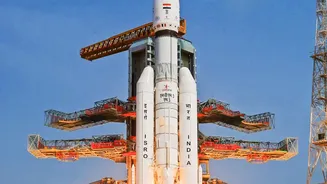
This global trend holds significant meaning for India. With over 400 space startups and a rapidly growing commercial sector, the nation is poised to be a major player. Liberalised FDI policies are attracting international investment into India's space ecosystem. ISRO has already demonstrated key autonomous technologies with its SPADEX mission, which performed autonomous docking and power transfer between two satellites, making India only the fourth nation to do so. As ISRO develops its next-generation launch vehicles and private Indian companies build their own satellite constellations, integrating AI and on-orbit processing will be essential to remain competitive, enhance capabilities, and contribute to a self-reliant space infrastructure. The ability to build and deploy intelligent space assets will be a defining feature of the next chapter in India's celebrated space journey.