

The Big Picture: More Than Just a Train
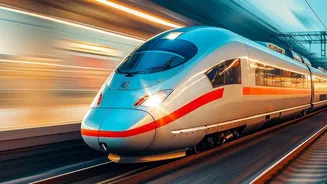
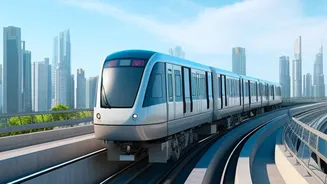
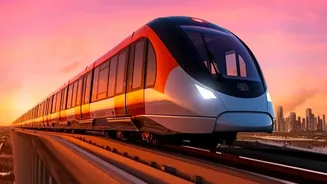
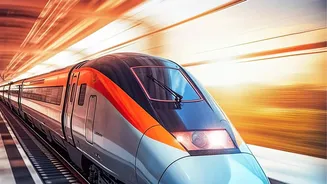
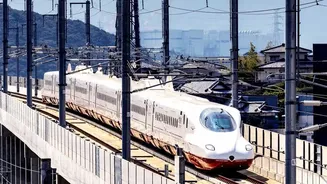
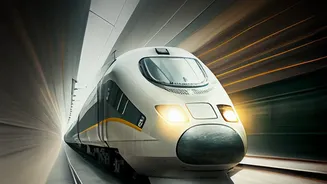
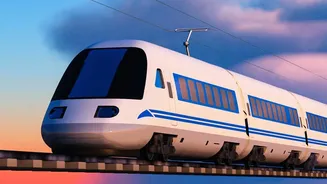
The Mumbai-Ahmedabad High-Speed Rail (MAHSR) project is one of India's most significant ongoing infrastructure undertakings. The 508-kilometre line will connect the economic hubs of Mumbai and Ahmedabad, slashing travel time from over six hours to approximately
two hours for a limited-stop service. Designed for operating speeds of 320 km/h, the project is being developed by the National High Speed Rail Corporation Limited (NHSRCL) using Japan's renowned Shinkansen technology. This involves not just laying tracks but also constructing a massive network of viaducts, bridges, stations, and even an undersea tunnel near Mumbai, setting a new standard for public transportation in the country. The project represents a technological leap and a key component of the 'Make in India' and 'Viksit Bharat' vision, aiming to modernize the country's railway network.
Current Status: Kilometres of Progress
After facing initial delays, particularly with land acquisition in Maharashtra, construction is now advancing at a remarkable pace. According to recent updates from mid-2026, significant portions of the civil work are complete. Hundreds of kilometres of viaducts—the elevated structures that carry the track—have been erected, and pier work is complete over a vast stretch of the corridor. In Gujarat, several stations, including those in Surat and Vapi, are in advanced stages of construction, with some already seeing track-laying activities. Work has also been completed on numerous river bridges, a major engineering feat. Railway Minister Ashwini Vaishnaw confirmed that the first indigenous body frame for the train has been completed and sent for crucial strength testing, an important step before manufacturing the prototype.
The Road to 2027: A Phased Rollout
The May-June 2027 trials will not cover the entire 508-km route at once. Instead, the launch will be phased. The initial test runs are expected to take place on a completed section in Gujarat, likely between Surat and Bilimora or Surat and Vapi. This stretch is slated to be the first to open for commercial operations, potentially as early as August 2027, just a few months after testing concludes. Following this, other sections within Gujarat will be opened sequentially, gradually extending the service. The final leg connecting to Mumbai, which includes complex underground construction at Bandra Kurla Complex (BKC), is expected to be the last to be completed, with the entire corridor aiming for full operation by 2029.
Why This Milestone Matters
The confirmation of a 2027 trial date is significant because it provides a concrete timeline for a project that has captured the public's imagination for years. It signals that major hurdles have been crossed and that the project has regained momentum. Beyond the immediate benefit of faster travel, the bullet train is expected to have a profound economic impact. It will enhance connectivity between two major business centres, potentially boosting trade, tourism, and real estate development along the corridor. It is also a massive generator of employment and a vehicle for skill development, as Indian engineers and workers collaborate on sophisticated Shinkansen technology. Furthermore, the project's progress serves as a template for a planned national network of high-speed rail corridors, with seven more routes already proposed to connect other major cities across India.