

Two Problems, One Innovative Solution
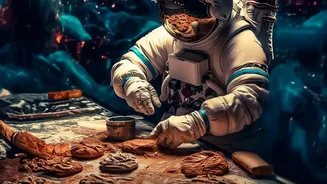
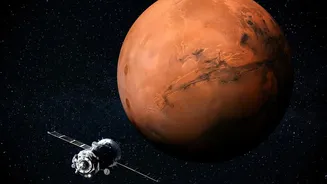
Long-duration space missions, like a potential three-year round trip to Mars, face a critical challenge: how to pack enough food and what to do with the inevitable waste that accumulates. Every kilogram launched into space is incredibly expensive, making
resupply impossible and self-sufficiency paramount. Back on Earth, we face a parallel crisis in the form of 6.3 billion tons of plastic waste choking our landfills and oceans. A team of researchers at Southern Illinois University Carbondale, however, saw a link. They asked: since plastic and food are both carbon-based, could one be turned into the other? Their work, part of NASA's Deep Space Food Challenge, aims to solve both problems at once by upcycling waste into valuable nutrition.
From Plastic to Protein
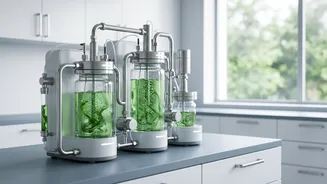
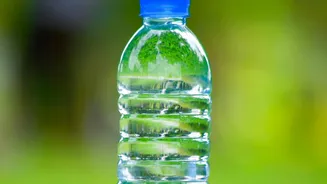
The process of turning a PET plastic bottle—the kind used for water and soda—into something edible is complex, but it doesn't involve actually eating plastic. First, the plastic and other waste materials like leftover corn stalks are broken down. Using a process that involves high heat, pressure, water, and oxygen, the tough plastic polymers are deconstructed into smaller, carbon-rich molecules, creating a kind of liquid feedstock. This pre-digested material is then fed to specially engineered microbes. The researchers used several strains of yeast, including common baker's yeast, which were genetically programmed to consume these molecules. As the microbes feast on this carbon-rich buffet, they multiply, creating a thick biomass that is about 50-55% protein.
The Proof Is in the Cookie
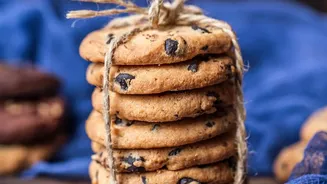
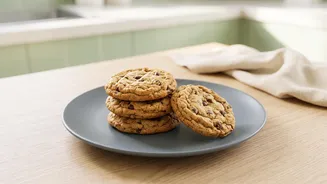
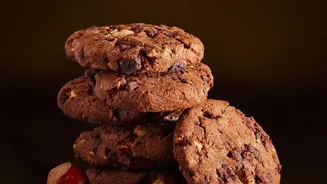
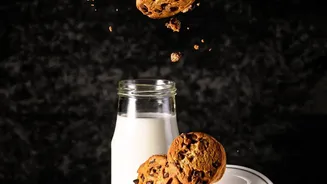
A slurry of microbial biomass on its own doesn't sound very appetizing. To make it more palatable, the research team is working to improve its sensory properties and nutritional value. For instance, they have programmed one yeast strain to produce vanillin—the compound that gives vanilla its flavor and aroma—from plant-based waste. Another strain converts a molecule from the broken-down PET plastic into beta-carotene, which our bodies turn into Vitamin A. This resulting protein-rich dough is mixed with conventional ingredients like fiber and starch before being extruded through a 3D printer into a cookie shape. The prototype, named µBites (pronounced 'microbites'), is the proof-of-concept for this circular food system.
Applications for Space and Earth
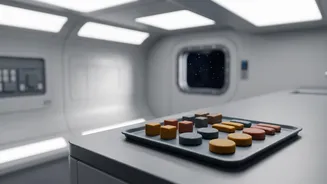
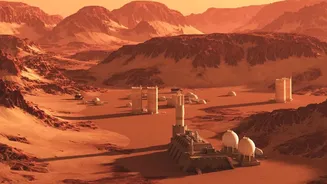
The primary goal of this research is to create a closed-loop system for astronauts. On a long mission, crew members could use a bioreactor to convert their plastic packaging and other inedible waste into fresh, nutrient-dense food, significantly reducing the mass they need to carry from Earth. While the team didn't win the top prize in the NASA challenge, the agency encouraged them to continue their work. The implications for Earth are just as profound. The technology offers a potential pathway to upcycle the mountains of plastic waste into a food source for disaster zones or other resource-limited environments. While safety testing has reportedly cleared µBites for consumption, the team is awaiting institutional approval for formal taste tests. Initial smell tests suggest most participants would be willing to eat the cookies in a situation where resources were scarce. The biggest hurdle may not be the science, but public perception.