



A startling headline suggests a political intervention in the leadership of one of the world's most valuable companies. But the story of Jensen Huang's position at Nvidia, and any involvement from Donald Trump, requires a much closer look.
The Unshakeable CEO
First, let's
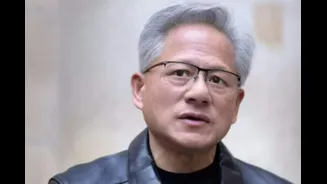
address the core premise of a 'reinstatement'. For a CEO to be reinstated, they would first have to leave their post. In the case of Jensen Huang and Nvidia, this has never happened. Huang is one of the co-founders of Nvidia, which was established in 1993. He has served as the company's president and Chief Executive Officer continuously since its inception. There has been no period where he stepped down, was ousted, or took a leave of absence that would have necessitated a 'return'. His leadership has been a constant, guiding force for the company for over three decades. Under his watch, Nvidia evolved from a niche graphics card maker into a global powerhouse driving the artificial intelligence revolution. His tenure is one of the longest and most successful in modern tech history, making the idea of his quiet removal and subsequent return highly improbable and factually unsupported. Any reports suggesting otherwise are contrary to the public record and the company's history.
Investigating the Trump Connection
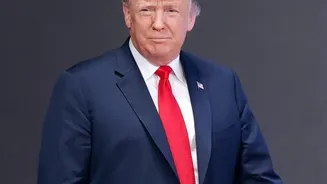
The second part of the claim—that former President Donald Trump urged the Nvidia board to bring Huang back—is equally unsubstantiated. A thorough review of public statements, financial news archives, and credible reporting reveals no evidence of Trump making such a request, either publicly or privately. While presidents and former presidents often weigh in on matters of national economic interest, direct intervention in the C-suite of a specific, publicly traded company like Nvidia would be an extraordinary and widely reported event. No major news organization has reported on any such communication. The absence of any credible sourcing for this claim suggests it is likely a fabrication or a piece of misinformation that has gained traction online. The intersection of high-stakes politics and big tech is a fertile ground for rumors, but this particular story lacks a factual foundation.
Why Nvidia is a Magnet for Rumors
So why would such a rumor emerge? Nvidia's meteoric rise has made it more than just a tech company; it's a geopolitical asset and a barometer for the future of technology. With a market capitalization that rivals the GDP of many countries, its stability and leadership are matters of global interest. The company's GPUs (Graphics Processing Units) are the engine behind the current AI boom, making Nvidia a critical component of technological progress and national competitiveness. This immense influence ensures that any story, true or false, involving its leadership is guaranteed to attract attention. Furthermore, as AI becomes increasingly intertwined with national security and economic strategy, figures like Jensen Huang are elevated from corporate leaders to players on the world stage. This visibility makes them, and their companies, prime targets for speculation and disinformation campaigns designed to stir markets or sow uncertainty.
Where Politics and Tech Really Meet
While the story of Trump intervening in Nvidia's boardroom is unfounded, it's not entirely divorced from a larger reality: the growing nexus between Washington and Silicon Valley. The US government, under multiple administrations, has taken a keen interest in the semiconductor industry. This is not about individual CEO appointments but about broader strategic goals. Policies like the CHIPS and Science Act, for example, represent a massive government effort to bolster domestic chip manufacturing and reduce reliance on foreign supply chains, particularly from Asia. The Trump administration was also vocal about on-shoring critical manufacturing and protecting American intellectual property from rivals like China. These are the real, documented instances where politics and the tech industry intersect. The focus is on policy, trade, and industrial strategy—not on boardroom melodrama. Nvidia, as a leading American chip designer, is central to these strategic conversations, but the dialogue happens at the level of policy, not personnel.