






A Bridge on Wheels
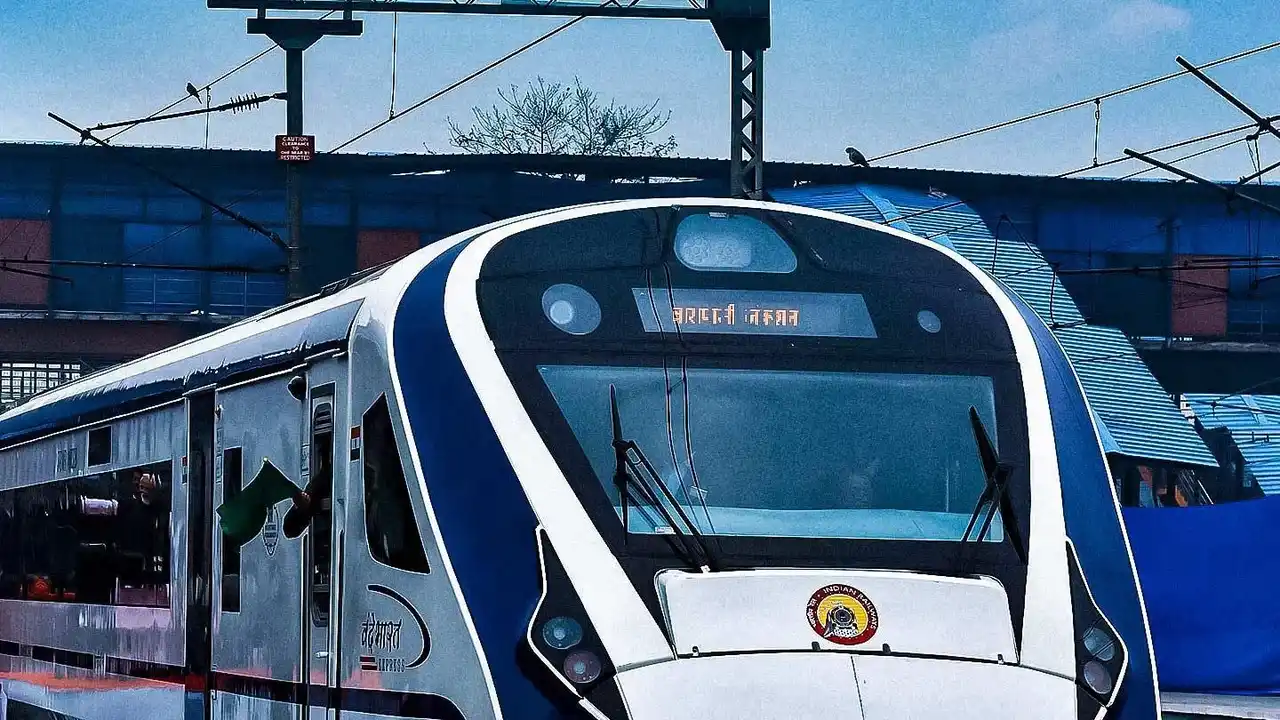
The story of Attari railway station was, for over four decades, the story of the Samjhauta Express. Inaugurated on July 22, 1976, following the Simla Agreement, the 'Agreement Express' was more than just a train service; it was a tangible symbol of hope
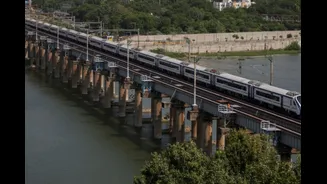
and connection between India and Pakistan. Twice a week, it would cross the border, reuniting families, carrying pilgrims, and serving as one of the few land links between two nations with a complex history. The station itself, otherwise a quiet outpost, would come alive for these arrivals and departures. Known officially as Attari Sham Singh Railway Station, it was the final stop in India on the historic Amritsar-Lahore line, where customs and immigration checks were performed before the train completed its short journey to Wagah in Pakistan. This bi-weekly rhythm defined life at the station, making it a place of poignant farewells and emotional reunions.
The End of the Line
The journey of the Samjhauta Express was often interrupted by political turbulence, with services suspended during periods of high tension, including after the 2001 Parliament attack and the 2007 assassination of Benazir Bhutto. However, its final halt came in August 2019. Following India's decision to revoke Article 370 of the Constitution, which granted special status to Jammu and Kashmir, Pakistan suspended the service. On August 8, 2019, Pakistani railway authorities halted the train at the Wagah border, refusing to let their crew enter India, citing security concerns. India sent its own crew to retrieve the train and its stranded passengers, but soon after, both nations officially cancelled their respective services. The once-bustling platforms of Attari station fell silent, marking the definitive end of an era. The train, a symbol of peace, became another casualty of the fraught bilateral relationship.
From Transit Hub to Tourist Landmark
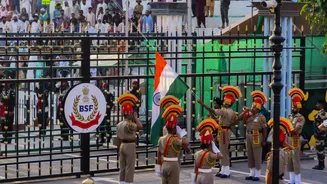
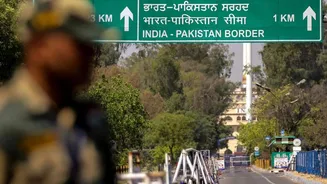
With the Samjhauta Express suspended indefinitely, the purpose of Attari station fundamentally shifted. It was no longer a transit point for cross-border passengers but was rapidly cementing its identity as a destination in its own right. The true anchor of news and activity had already moved just a few kilometres away to the Attari-Wagah Joint Check Post. Here, the daily Beating Retreat ceremony had grown from a simple, solemn flag-lowering drill started in 1959 into a full-blown spectacle of coordinated showmanship. Every evening, thousands of spectators gather in stadium-like stands to witness the dramatic and highly choreographed display by India's Border Security Force (BSF) and the Pakistan Rangers. This ceremony has become the main attraction, transforming the border area into a major tourist hub for visitors to Amritsar.
The Daily Spectacle of Patriotism
The Beating Retreat ceremony is the new 'main event' that defines the Attari experience. Long before the soldiers begin their high-kicking, stomping parade, the atmosphere is electric. The air fills with Bollywood music and patriotic chants of “Hindustan Zindabad!” as crowds cheer and wave the national flag. The ceremony itself is a mesmerising display of mock aggression and perfect synchronisation, as soldiers from both nations mirror each other's elaborate manoeuvres before the flags are lowered at sunset with a handshake of good faith. This daily ritual, a blend of rivalry and fraternity, serves as a powerful expression of national pride and has become a must-see for domestic and international tourists alike. The station, once a quiet facilitator of passage, now serves a region whose primary draw is this boisterous daily performance.
A Future Beyond the Rails
While the passenger trains are gone, Attari's relevance continues to evolve. The Integrated Check Post (ICP) at Attari remains a critical, albeit sensitive, land route for trade, particularly for goods from Afghanistan. However, this too is subject to the political climate, with trade volumes plummeting during periods of tension. Recognising the area's massive tourism potential, government plans are underway to further develop Attari as a premier border tourism destination under the Swadesh Darshan 2.0 scheme. These plans include building new entrance gates, visitor amenities, and immersive galleries to enhance the tourist experience. The railway station itself, part of broader upgrades to India's rail network, remains a high-security zone where a passport and visa are required for entry, a stark reminder of its strategic location. The silence of the tracks tells one story, but the roar of the crowds at the border tells another—of a place that has found a new, powerful voice.