





The Foundation of Fullness
The magic of a Dutch braid lies in its technique. Unlike a French braid where strands are crossed over the middle, a Dutch braid involves crossing the outer strands under the middle piece. This "inside-out" method makes the braid pop, sitting on top of the hair
rather than blending into it. For long hair, this lift at the root is the first step to achieving volume. The braid acts as a raised spine along the scalp, preventing hair from lying flat and creating an instant boost before you even consider other styling tricks.
Building Structure for Lasting Styles
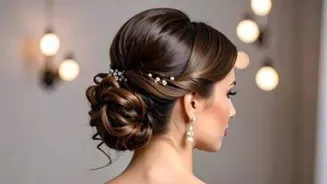
Long hair can be heavy, causing updos and elaborate styles to sag or fall apart throughout the day. Dutch braids provide an internal scaffolding that offers support and structure. By creating one or more tight (but comfortable) braids as a base, you create an anchor for pinning other sections of hair. A crown braid, for example, creates a sturdy frame around the head, while twin Dutch braids leading into a bun provide a secure foundation that distributes weight and holds the style firmly in place. This structural integrity means your hairstyle will look just as good at the end of the day as it did in the morning.
The Art of 'Pancaking' for Maximum Volume
Once the braid is complete, you can unlock its full potential with a technique called “pancaking.” This involves gently pulling on the outer loops of the braid, starting from the bottom and working your way up. This simple action flattens and widens the braid, creating the illusion of thicker, fuller hair. For those with fine or thin hair, pancaking is a game-changer, dramatically increasing the visual impact and volume of the style. To get the best results, it's often recommended to braid tightly at first, which gives you more control when you go back to gently tease the sections apart. Using a texturizing spray or volume powder beforehand can also provide grip, helping the pancaked sections hold their shape.
The Fine Line: Comfortable Tension vs. Damage
The most critical aspect of any braid is tension. While a snug braid is necessary for structure, excessive tightness can lead to discomfort and serious damage. If a braid causes pain, headaches, or stinging, it's too tight. This constant pulling can cause a type of hair loss known as traction alopecia, where the strain damages the hair follicles, leading to thinning and breakage, especially around the hairline. Early warning signs include small pimple-like bumps, redness, and itching on the scalp. If caught early, traction alopecia is often reversible by simply stopping the tight hairstyles. However, prolonged tension can lead to permanent follicle damage and irreversible hair loss.
Tips for a Healthy, Secure Braid
Achieving the perfect balance of security and comfort is key. Always communicate with your stylist if you feel any pain during the braiding process; a lasting style comes from skill, not excessive tightness. If you're styling your own hair and it feels too tight, you can try gently massaging your scalp or using the end of a rat-tail comb to create a tiny bit of space at the roots. A warm, damp towel wrapped around your head for a few minutes can also help the hair relax. For a few days after braiding, it's best to wear the braids down rather than in a tight bun or ponytail to give your scalp a break from any additional pulling. Remember, a hairstyle should never be painful.