






What Was the 'Phantom Braking' Problem?
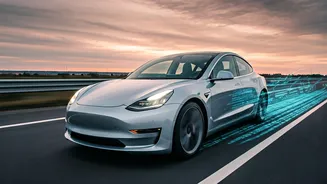
The investigation, opened by the National Highway Traffic Safety Administration (NHTSA) in early 2022, focused on approximately 695,000 Model 3 and Model Y vehicles from the 2021-2022 model years. Owners had reported concerning instances of their cars
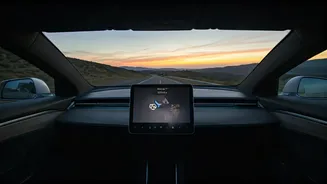
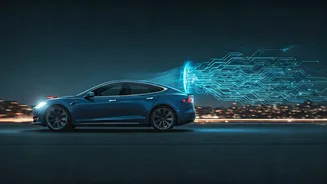
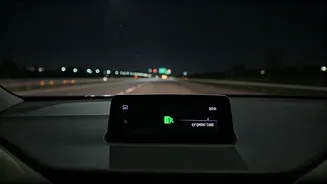
suddenly decelerating at highway speeds without an obvious reason. These events, dubbed “phantom braking,” were linked to Tesla's driver-assistance systems like Autopilot and Traffic-Aware Cruise Control. The probe was initiated after complaints surged, raising questions about the reliability of the technology. Investigators pointed to Tesla's 2021 shift from a sensor system using both radar and cameras to a 'vision-only' architecture as a likely contributing factor, where the system might occasionally misinterpret road conditions and apply the brakes unnecessarily.
The Fix That Came Over the Air
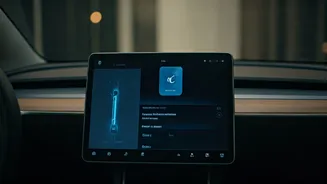
Instead of a traditional, costly recall requiring owners to bring their cars to a service centre, Tesla addressed the problem remotely. The company deployed a series of over-the-air (OTA) software updates starting in early 2022. These updates recalibrated the driver-assistance software to reduce the instances of false braking events. The effectiveness of this approach is clear in the data: NHTSA noted that incident reports plummeted from a peak of over 300 when the investigation began to just three in the first half of 2026. This dramatic drop demonstrated to regulators that the software fix had successfully mitigated the issue for the vast majority of affected vehicles.
Why Regulators Closed the Investigation
NHTSA cited two main reasons for closing the preliminary evaluation. Firstly, the sharp and sustained decline in complaints showed that Tesla's software updates were effective. Secondly, the agency determined that the issue posed a "low demonstrated hazard to drivers." According to the investigation's findings, the unexpected braking events, while startling for drivers, did not cause vehicles to change lanes or lead to collisions. No crashes, injuries, or fatalities were linked to the phantom braking issue throughout the entire four-year evaluation period. While NHTSA reserves the right to reopen the case if new circumstances arise, the closure is a significant regulatory milestone.
A New Precedent for Automotive Recalls
This case highlights a major shift in how automotive safety issues are handled in the age of the software-defined vehicle. For decades, a recall meant a physical fix. Now, for issues rooted in code, an OTA update can provide a faster, cheaper, and more efficient solution. This closure, along with another recent NHTSA probe into Tesla's power steering that was also resolved with a software update, reinforces the legitimacy of this modern approach. It sets a precedent for how regulators interact with tech-forward carmakers, acknowledging that complex software can be fine-tuned and corrected without requiring a massive logistical effort. It’s a model that distinguishes software-triggered events from true mechanical defects in a vehicle's braking system.