


Before You Begin: The Golden Rules of DIY Skincare
Before you mix up any of these brightening concoctions, it is crucial to prioritize safety. Natural doesn't always mean gentle for every skin type. The most important step is to conduct a patch test. Apply a small amount of the mask to a discreet area,
like behind your ear or on your jawline, and wait 24 hours to check for any redness, itching, or irritation. Always use clean bowls, spoons, and brushes to avoid introducing bacteria into your mask and onto your face. Lastly, listen to your skin; if something stings or feels uncomfortable, wash it off immediately. These treatments should be used sparingly—once or twice a week is generally sufficient.
1. Turmeric and Yogurt for a Golden Glow
A staple in traditional skincare, turmeric contains curcumin, a compound celebrated for its anti-inflammatory and antioxidant properties that can help brighten skin tone. Yogurt contains lactic acid, a gentle exfoliant that helps dissolve dead skin cells.
How to Make It: Mix one teaspoon of turmeric powder with two tablespoons of plain, unflavored yogurt to form a smooth paste. Apply a thin layer to your face, leave it on for 10-15 minutes, and rinse with lukewarm water.
Caution First: Turmeric can temporarily stain the skin yellow, especially on lighter complexions. It can also cause irritation for some. Using a small amount and blending it well with yogurt can help mitigate this. Avoid if you have very sensitive skin.
2. Papaya and Honey for Natural Exfoliation
Papaya is rich in an enzyme called papain, which acts as a natural exfoliant to slough away dead skin cells, revealing a brighter complexion underneath. Honey is a natural humectant, meaning it draws moisture into the skin, and it also possesses antibacterial properties.
How to Make It: Mash a few pieces of ripe papaya into a smooth pulp. Stir in one teaspoon of raw honey. Apply the mixture to your face for about 15 minutes before rinsing off.
Caution First: The enzymes in papaya can be potent. While it's great for dull skin, it may be too strong for sensitive types. Always perform a patch test to ensure your skin doesn't react.
3. Oatmeal and Milk for Soothing Brightness
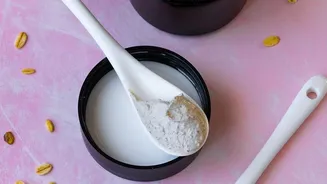
Oatmeal is incredibly soothing and contains compounds that reduce inflammation and redness. It provides gentle exfoliation without being harsh. Milk adds moisture and its lactic acid content offers a mild brightening effect, making this mask ideal for those with sensitive skin looking for a gentle glow.
How to Make It: Grind two tablespoons of oats into a fine powder. Mix with enough milk to form a spreadable paste. Let it sit for a minute to thicken, then apply to the skin for 15 minutes.
Caution First: While generally very gentle, ensure you have no allergies to the ingredients. Finely grinding the oats is key to avoid a scrub that is too coarse for the delicate skin on your face.
4. Sandalwood and Rose Water for Calming Radiance
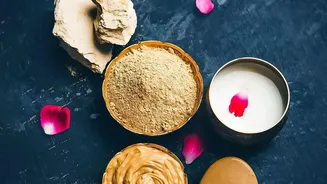
A traditional combination for clear, glowing skin, sandalwood is known for its cooling properties and its ability to help even out skin tone. Rose water helps to tone and hydrate the skin, leaving it feeling refreshed.
How to Make It: Mix one tablespoon of pure sandalwood powder with enough rose water to create a smooth, creamy paste. Apply it evenly on your face and neck, and let it dry for about 15 minutes before rinsing.
Caution First: The quality of sandalwood powder matters; ensure it is pure and free from additives. For some, especially those with dry skin, sandalwood can be slightly drying. If you experience a burning sensation or pimples after use, discontinue immediately.
5. Tomato and Gram Flour for a Clear Complexion
Tomatoes are rich in lycopene and Vitamin C, antioxidants that can help brighten the skin and protect it from environmental damage. Gram flour, or besan, is a classic cleanser in Indian households that helps absorb excess oil and exfoliate the skin.
How to Make It: Mix the pulp of one small, ripe tomato with one to two tablespoons of gram flour to form a paste. Apply and leave on for 15 minutes, until it starts to feel dry, then wash off.
Caution First: The natural acids in tomatoes can cause irritation or redness, particularly on sensitive skin. It's advisable to avoid sun exposure immediately after using this mask, as it may increase sun sensitivity.
6. Orange Peel Powder and Honey for a Vitamin C Boost
Orange peels are a potent source of Vitamin C and antioxidants, which can help reduce pigmentation and brighten the skin. When using orange peel, it's best to use dried powder rather than the fresh peel, as the essential oils in fresh peels can be irritating.
How to Make It: Mix one tablespoon of dried orange peel powder with one tablespoon of honey. Add a little water or yogurt if the paste is too thick. Apply for 15 minutes and rinse thoroughly.
Caution First: Never use pure lemon or orange juice directly on your skin, as their high acidity can cause irritation and photosensitivity. Stick to dried peel powder, which is a gentler alternative.
7. Rice Flour and Green Tea for an Antioxidant Polish
Rice flour has been used for generations in Asian beauty routines for its ability to gently exfoliate and absorb excess oil. Green tea is packed with antioxidants that help protect the skin from free radicals and soothe inflammation.
How to Make It: Brew a strong cup of green tea and let it cool completely. Mix two tablespoons of fine rice flour with enough cooled green tea to form a smooth paste. Apply for 15-20 minutes before rinsing.
Caution First: Ensure the rice flour is very finely ground to prevent micro-tears in the skin. The consistency should be a paste, not a gritty scrub. This mask is great for oily and combination skin, but those with very dry skin should follow up with a good moisturizer.