




A Messenger from the Moon, Found on Earth
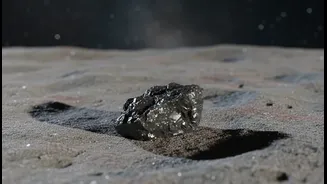
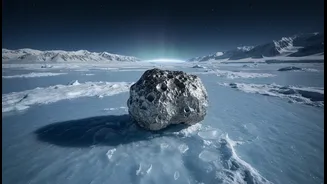
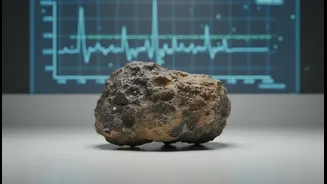
In 1982, a small, dark rock measuring just a few centimetres across was discovered in the Allan Hills region of Antarctica. This meteorite, named Allan Hills A81005 or ALHA 81005, would go on to make history. After careful analysis, scientists confirmed
it was not from an asteroid but was, in fact, a piece of the Moon itself, blasted off the lunar surface by an impact and sent on a long journey to Earth. It was the very first rock on our planet to be officially recognised as a lunar meteorite. For decades, ALHA 81005 and others like it have been invaluable samples of the Moon, offering clues about its composition without the need for a sample-return mission. But these meteorites have always had one missing piece of information: their exact origin on the lunar surface.
India's Ground Truth at the South Pole
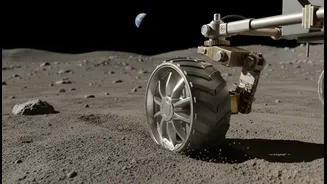
Fast forward to August 2023, when India's Chandrayaan-3 mission successfully landed its Vikram lander near the Moon's south pole, deploying the Pragyan rover. Onboard the rover was a key instrument, the Alpha Particle X-ray Spectrometer (APXS), designed to analyse the elemental composition of the lunar soil and rocks right on the surface. Scientists from the Physical Research Laboratory (PRL) in Ahmedabad have now used this on-site data from the landing site, named Shiv Shakti Statio, to conduct a comprehensive geochemical study. The results, published in the journal npj Space Exploration, are creating a fascinating link back to that Antarctic meteorite.
A Surprising Geochemical Match
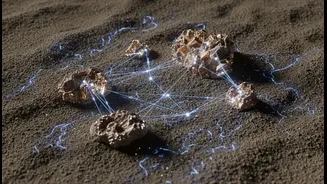
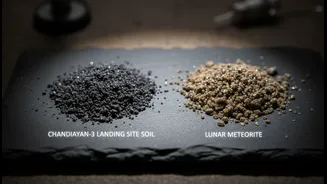
The PRL team compared the APXS data from Shiv Shakti Statio with the known compositions of 66 lunar meteorites found on Earth. One meteorite stood out as the closest match: ALHA 81005. The analysis showed that the soil at the Chandrayaan-3 landing site and the 40-year-old meteorite share a remarkably similar chemical signature. Specifically, both have lower-than-average levels of aluminium oxide and significantly higher levels of iron and magnesium oxides compared to typical lunar highlands. For instance, the Shiv Shakti soil contains about 26.1% aluminium oxide, very close to the 25.8% in ALHA 81005. Both also sit in a rare compositional zone between the two major lunar rock types, known as ferroan anorthosites and Mg-suite rocks.
Rewriting the Story of the Lunar Crust
ISRO has clarified that this strong resemblance does not mean ALHA 81005 was ejected from the exact spot where Chandrayaan-3 landed. Instead, it provides a powerful new context. The finding indicates that both the meteorite and the soil at Shiv Shakti Statio represent the same type of magnesium-rich lunar crust. Scientists believe this material, which is usually found in the Moon's deeper layers, may have been excavated and scattered across the surface by a massive, ancient impact. A likely candidate is the event that formed the South Pole-Aitken basin, one of the largest known impact craters in the solar system, located about 350 km from the landing site. This suggests that the Pragyan rover was analysing ancient material churned up from deep within the Moon. By linking a specific location on the Moon with a well-studied sample on Earth, the discovery helps validate decades of meteorite analysis and provides a 'ground truth' for understanding the Moon's complex geology.