




Gullfoss: The Golden Icon
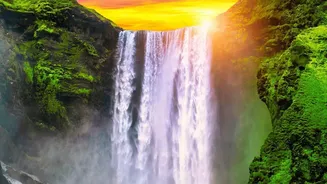
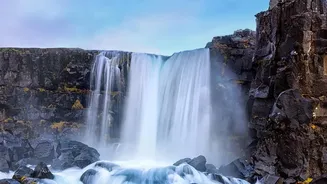
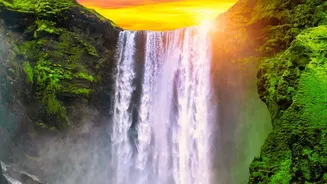
A star of the famous Golden Circle route, Gullfoss, or the “Golden Falls,” is a must-see. This powerful, two-tiered cascade plunges 32 meters into a rugged canyon, creating a spectacle of mist and, on sunny days, vibrant rainbows. It’s one of Iceland's
most visited attractions and for good reason. For your 2026 visit, note that there are two main viewing areas: an upper platform offering panoramic views and a lower path that gets you closer to the thundering water. Parking is free, and the main paths are accessible year-round, though the lower trail may close in winter due to ice. Arrive before 9:30 AM to avoid the biggest crowds.
Seljalandsfoss: The Walk-Behind Wonder
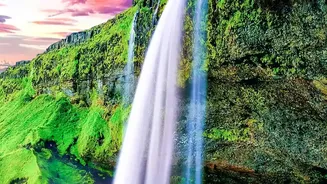
For a truly immersive experience, head to Seljalandsfoss on the South Coast. What makes this 60-meter-high waterfall so famous is the path that allows you to walk directly behind the cascading water. This unique perspective offers incredible photo opportunities, especially at sunset. Be prepared to get wet from the constant spray, so waterproof clothing and sturdy, grippy shoes are essential as the path can be slippery. The trail behind the falls is typically open in summer but is often closed in winter due to ice, so plan your 2026 trip accordingly. A short walk from Seljalandsfoss is its hidden neighbour, Gljúfrabúi, tucked away inside a canyon.
Skógafoss: The Picture-Perfect Curtain
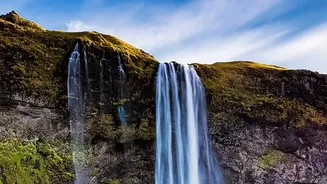
With its wide, powerful curtain of water dropping 60 meters, Skógafoss is often considered one of Iceland's most beautiful and photogenic waterfalls. Located just off the Ring Road, it's easily accessible. You can walk right up to the base and feel the immense power and spray, or you can climb the staircase of over 500 steps to the viewing platform at the top. This top view not only provides a different perspective of the falls but is also the starting point for the famous Fimmvörðuháls trail, a popular day hike that leads past 25 more cascades. For the best photos, visit on a sunny day when single or double rainbows often form in the mist.
Dettifoss: Europe's Raw Power
Located in Northeast Iceland, Dettifoss is reputed to be the most powerful waterfall in Europe by volume. Fed by the Vatnajökull glacier, its sediment-rich, grey-brown water thunders 45 meters down into the Jökulsárgljúfur canyon with incredible force. You can visit Dettifoss from either the west or east bank, and your choice makes a difference. The west side (Road 862) is paved and more accessible, with developed viewing platforms, but you're more likely to get soaked by the spray. The east side (Road 864) is a rougher gravel road but often provides more dramatic, panoramic views with fewer crowds.
Goðafoss: The Waterfall of the Gods
Goðafoss is not only stunningly beautiful with its elegant, 12-meter-high horseshoe-shaped cascade, but it's also steeped in history. Its name, "Waterfall of the Gods," is tied to a pivotal moment in the year 1000 AD. Legend says that the lawspeaker Þorgeir Ljósvetningagoði made Christianity Iceland's official religion and then threw his statues of the Norse gods into the falls as a symbolic act. Conveniently located on the Ring Road in North Iceland, Goðafoss is easily accessible from both its east and west banks, each offering different but equally impressive views.
Kirkjufellsfoss: The Photographer's Dream
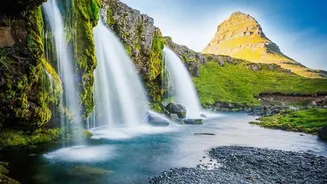
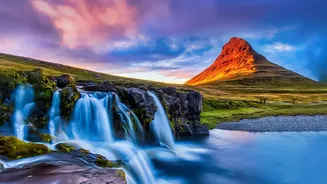
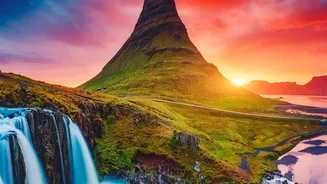
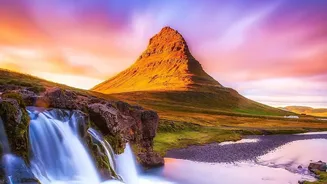
While not the largest or most powerful, Kirkjufellsfoss may be Iceland's most photographed waterfall, thanks to its iconic backdrop: the uniquely shaped Kirkjufell mountain. Located on the Snæfellsnes Peninsula, this scene is a bucket-list shot for many photographers, especially with the Northern Lights dancing above in winter or under the midnight sun in summer. The classic view is from a path near the parking area, which perfectly frames the small, multi-tiered falls in the foreground with the mountain behind. To capture that famous silky water effect, photographers often use tripods and long exposures.