





The Rhythm of Recall
One of the most fascinating recent discoveries is the role of brain rhythms in memory. Research from the University of Oxford has shown that the brain isn't just a passive storage device; it actively organizes memory through specific rhythms. Scientists
found that during learning, the hippocampus—a key memory centre in the brain—generates brief bursts of very slow brain waves. These rhythms, beating at about two times per second, act like a conductor's baton, synchronizing activity across different memory-related brain regions. This coordination is crucial for linking the different stages of memory, from the initial learning of an experience to its later storage and recall.
Practice While You Rest
Perhaps even more intriguing is what happens after the learning is done. The Oxford study revealed that the exact same patterns of brain activity seen during learning are replayed or 'reactivated' when a person is resting. Think of it as your brain rehearsing the new information in the background, even when you're not consciously thinking about it. The strength of this reactivation was found to be a strong predictor of how well a person would later remember the information. This suggests that our memory processing is not a continuous stream but happens in organised moments where the brain syncs up to strengthen what we've learned, particularly during rest and sleep.
Separating What from Where
Another major mystery has been how the brain stores a memory's content (the 'what') separately from its context (the 'where' and 'when') without mixing them up. Research from the University of Bonn has provided an answer. Their findings show that the brain uses two distinct groups of neurons for this task. One group of neurons stores the content, like the face of a person, while another group stores the context, like the location where you met them. When you recall a memory, these two groups of neurons coordinate their activity, briefly connecting to reconstruct the full, detailed experience. This elegant system allows us to recognise the same person or object in completely different situations without confusion.
Why Does This Matter?
This deeper understanding of brain activity is more than just academic. It opens up new avenues for understanding and potentially treating memory-related disorders that affect millions. For conditions like Alzheimer's disease and dementia, knowing how memory consolidation works—or fails to work—is a critical step toward developing new therapies. For instance, research from UCLA Health has already shown that targeted deep-brain stimulation during sleep can improve memory consolidation by enhancing the dialogue between the hippocampus and the cerebral cortex. In experiments, this stimulation helped participants perform better on memory tests, suggesting that we may one day be able to boost memory and counteract the effects of neurological disease by manipulating these very brain rhythms.
The Future of Memory
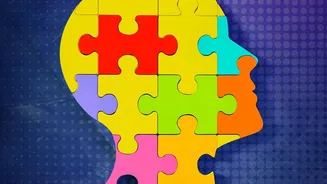
The science of memory is rapidly evolving. From understanding the role of specific proteins and synapses to decoding the brain waves that orchestrate it all, each discovery brings us closer to solving the puzzle of our past. This research challenges long-held theories and provides a more detailed, dynamic picture of the brain. While we may not have a perfect memory, it's clear our brains are working tirelessly, using sophisticated rhythms and coordinated activity to hold on to the experiences that shape who we are. As scientists continue to explore these intricate processes, the knowledge gained could transform not only medicine but also our fundamental understanding of learning and consciousness itself.