






The Essence of the Fast
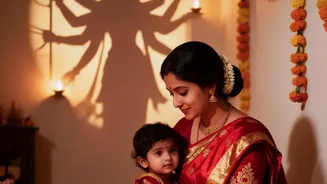
Karwa Chauth is a one-day festival celebrated on the fourth day after the full moon in the Hindu month of Kartika. Married women, primarily in Northern India, undertake a strict fast from sunrise to moonrise, abstaining from both food and water. The purpose
is to pray for the longevity, safety, and well-being of their husbands. The name itself is descriptive: 'Karva' refers to the earthen pot used in the rituals, and 'Chauth' means 'fourth day'. This observance is a profound expression of love, sacrifice, and the sanctity of the marital bond.
The Story of Queen Veeravati
The most famous legend associated with Karwa Chauth is that of the beautiful Queen Veeravati. She was the adored only sister of seven loving brothers. Following her marriage to a king, she returned to her parents' home to observe her very first Karwa Chauth. She began the demanding fast at sunrise, but as the day wore on, her resolve wavered. Unaccustomed to such hardship, she grew weak with severe hunger and thirst, anxiously awaiting the sight of the moon to break her fast.
A Deceptive Moonrise
Seeing their sister in such distress, Veeravati’s brothers couldn't bear her suffering. In an act of love, they decided to trick her into ending her fast early. They created an illusion of a moonrise by placing a mirror in the leaves of a distant pipal tree or, in some versions, by lighting a large fire behind a mountain to create a glow. Believing the moon had finally appeared, the unsuspecting Veeravati broke her fast and took her first morsel of food.
The Grave Consequence
The moment Veeravati broke her fast, the consequences were immediate and tragic. As she began to eat, she received the devastating news that her husband, the king, had died. Heartbroken and realizing she had been tricked, she began a journey back to her husband's palace. On the way, she encountered Lord Shiva and Goddess Parvati. Parvati revealed that the king’s death was a result of the prematurely broken fast. The goddess, moved by Veeravati’s grief and devotion, explained what she must do to reverse the tragedy.
Penance and Redemption
Following the goddess's instructions, Veeravati had to prove her unwavering devotion. The most common telling of the story says she was instructed to repeat the Karwa Chauth fast with complete and strict adherence. In another version, she kept a fast on every 'chauth' (fourth day) of the month for an entire year, painstakingly caring for her deceased husband's body. When the next Karwa Chauth arrived, she completed the fast perfectly. Her profound dedication and faith were so powerful that Yama, the god of death, was compelled to restore her husband to life.
The Legend's Legacy in Modern Rituals
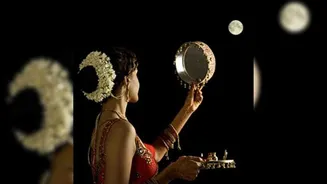
Veeravati's tale provides the narrative backbone for many of the rituals still practiced today. The use of a sieve (chhalni) to view the moon before looking at one's husband is seen as a symbolic act of separating the true from the false, a reminder of Veeravati's mistake of seeing a false moon. Her story serves as a cautionary tale about the importance of observing the fast with sincerity and discipline. It transforms the day from a simple ritual into a reenactment of a powerful story about love overcoming even death, cementing the festival's deep emotional and spiritual significance.