



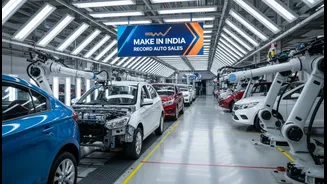


A Record-Breaking Quarter
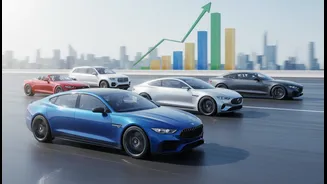
Recent data reveals that India's automotive industry has kicked off the financial year on an exceptionally strong note. According to figures from the Society of Indian Automobile Manufacturers (SIAM), the first quarter of 2026-27 (April-June) saw passenger
vehicles, commercial vehicles, and three-wheelers all register their highest-ever first-quarter sales. Data from the Federation of Automobile Dealers Associations (FADA) corroborates this, reporting June 2026 as the best June in history for vehicle retail across all major categories. While passenger car sales, a common barometer for consumer confidence, have been impressive, the surge in commercial and last-mile transport vehicles tells an even more significant story about the nation's economic engine.
The Commercial Vehicle Comeback
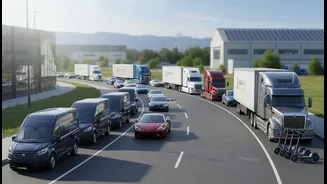
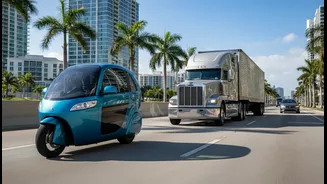
The commercial vehicle (CV) segment, often seen as a direct indicator of economic activity, has shown remarkable strength. For the April to June 2026 quarter, CV sales grew by a healthy 18.3% year-on-year, marking their best-ever Q1 performance. This growth isn't just a statistical blip; it reflects tangible momentum in the economy. The demand is fueled by increased government spending on infrastructure, a revival in mining and construction activities, and the ever-expanding logistics network supporting India's e-commerce boom. Interestingly, retail data shows that growth in rural markets for commercial vehicles is outpacing that in urban centres, suggesting that demand for goods transportation is broadening beyond major metros.
Three-Wheelers: Powering the Last Mile
Often overlooked, the humble three-wheeler is a critical component of India's mobility landscape, and this segment is thriving. Sales climbed by nearly 30% in the first quarter of the fiscal year, also an all-time high. In June 2026 alone, three-wheeler dispatches saw a year-on-year increase of over 26%. This surge is directly linked to the burgeoning gig economy and the need for efficient last-mile connectivity for everything from e-commerce parcels to food delivery and passenger transport in dense urban areas. A significant driver within this category is the rapid adoption of electric models, with EV penetration in the three-wheeler segment reaching new heights, pushed by both environmental considerations and favourable operating economics for drivers.
What's Fuelling the Broader Boom?
The synchronised growth across these diverse vehicle segments points to several underlying factors. Supportive government policies, including recent GST reforms that have lowered vehicle costs, have played a crucial role. Softer financing costs and wider credit availability have also made it easier for both individuals and businesses to purchase new vehicles. While passenger vehicles, particularly SUVs, continue to attract buyers with disposable income, the commercial segment's rise indicates that businesses are investing in their fleets. This is a strong vote of confidence in future economic activity, as companies purchase trucks and goods carriers when they anticipate more products to move and more services to deliver.