


A Landmark Test for a Modern Train
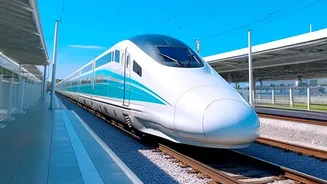
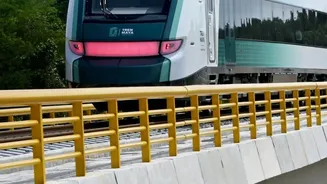
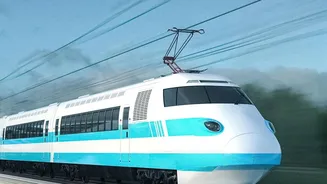
The South Western Railway has commenced safety and performance trials for a specially modified Vande Bharat Express on the critical Sakleshpur-Subrahmanya Road ghat section. This marks a significant step towards launching a direct, premium train service
connecting Karnataka's state capital with its primary coastal city. For years, the dream of a fast train journey on this route was hindered by immense technical challenges. Personnel from the Research Designs and Standards Organisation (RDSO) are on board a 20-car rake, specifically built by the Integral Coach Factory, to assess every aspect of the train's performance in this unique environment. The trials, which began around August 12, 2026, are expected to continue for several days to gather comprehensive data.
The Ghat Gauntlet
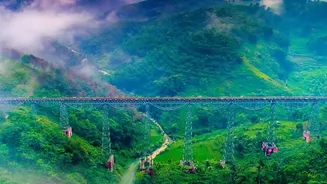
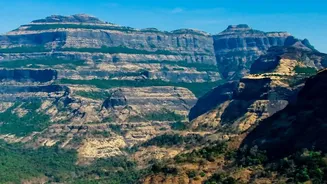
What makes this 55-kilometre stretch of track one of the most demanding in the country? The route slices through the lush, but treacherous, terrain of the Western Ghats. It features an astonishing 57 tunnels, 226 bridges, and over 100 sharp curves packed into a relatively short distance. The biggest challenge, however, is the steep gradient, which is 1-in-50 in railway terms. This means for every 50 metres the train travels forward, the track rises or falls by one metre. This intense slope, combined with sharp turns and the region's vulnerability to landslides during monsoons, requires exceptional control and braking power. For safety, the maximum permitted speed on this section is a cautious 30 kilometres per hour.
Special Modifications for a Special Route
A standard Vande Bharat trainset is not equipped for such severe inclines. Conventionally, trains on this route use additional 'banker' locomotives that are attached at the front or rear to provide extra power for climbing and control for descending. However, this approach is impractical for the integrated, aerodynamic design of the Vande Bharat. To solve this, the rake being used for these trials has been specially fitted with an Automatic Emergency Braking (AEB) system. This crucial safety feature automatically applies the brakes if the train exceeds the 30 kmph speed limit on the ghat, ensuring a safe descent without relying on external locomotives. The trials are designed to rigorously test this AEB system, along with the train's stability, acceleration, and overall handling on the steep gradients.
A New Era of Connectivity
The successful completion of these trials and subsequent safety clearances would herald a new era for travel between Bengaluru and Mangaluru. The current rail journey can take over eight hours. The proposed Vande Bharat service aims to slash this travel time to around five hours, offering a faster, more comfortable, and reliable alternative to road travel through the often-congested Shiradi Ghat. This improved connectivity is expected to be a major boon for business travellers, tourists, and students, strengthening the economic and social ties between the state's tech hub and its vital coastal region. The completion of electrification work on the entire route in late 2025 was the first major step, and these Vande Bharat trials are the next logical progression towards launching the service.