




A Surprising Discovery in a Cold Desert
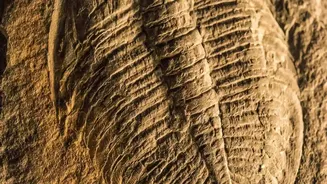
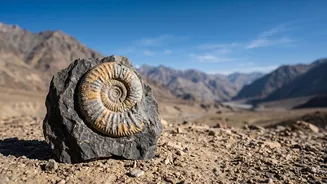
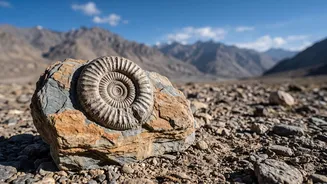
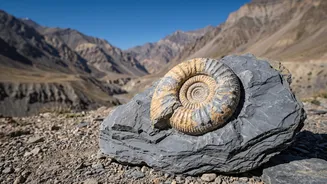
In the high-altitude Changthang region of eastern Ladakh, geologist Dr. Ritesh Arya has uncovered a rich collection of marine fossils. This isn't the first time such relics have been found in the Himalayas, but the location and type of fossils are causing
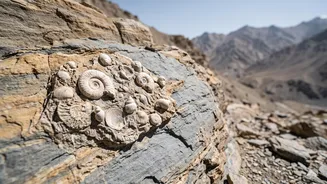
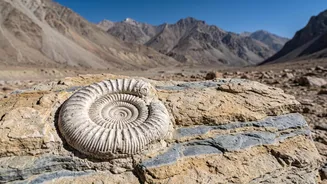
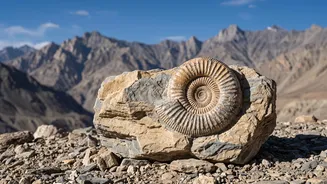
a stir among scientists. The collection is dominated by spiral-shaped gastropods (similar to modern snails), bivalves, and oyster-like forms, all dating back an estimated 34 to 38 million years to the Eocene epoch. Dr. Arya, founder of the Tethys Fossil Museum, made the discovery during a geological expedition, noting the fossils' striking resemblance to those found in the Subathu formation in Himachal Pradesh. "When I first saw the gastropods at Nyoma... I immediately recognised something familiar," Dr. Arya stated. "But this time I was standing in Nyoma, Ladakh. That was the real surprise."
The 'Fresh Angle' on an Ancient Sea
For decades, we've known that the Himalayas rose from the ancient Tethys Sea when the Indian continental plate collided with the Eurasian plate. However, previous fossil discoveries in areas near Nyoma primarily consisted of freshwater species. This new find is significant because it contains distinctly marine organisms. The key question scientists are now asking is whether this discovery marks a previously unknown eastward extension of the Eocene-era Subathu Sea deep into the Ladakh corridor. If confirmed, it would redraw the map of this ancient ocean, suggesting it was more extensive than previously believed right before the final continental collision that pushed the Himalayas skyward. This changes the story from just knowing there was an ocean to understanding its specific geography just before it vanished.
Painting a Picture of a Tropical Ladakh
These fossils tell a story of a Ladakh that is almost unrecognisable today. The presence of marine shells, combined with earlier discoveries of fossilised palm leaves and wood in the region, suggests a landscape that was far from a cold, high-altitude desert. Around 38 million years ago, this part of the Trans-Himalaya was likely an active coastal area with warm, shallow seas. The climate would have been hot and humid, similar to equatorial regions today, capable of supporting subtropical vegetation like palm trees. The organisms found, such as Turritella-type gastropods and bivalves, thrived in this marine environment. This single discovery helps assemble a more vivid picture of a lost world, where an ocean floor eventually became the roof of the world.
Why This Discovery Matters Today
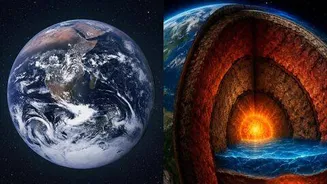
Beyond simply rewriting geological history, the Nyoma fossils provide crucial data points for modern science. Understanding the precise boundaries and environment of the Tethys Sea helps scientists refine models of tectonic plate movement and the dramatic process of mountain-building. This detailed knowledge of the past climate and geography of the Himalayas can also inform current research into climate change and regional biodiversity. By piecing together how this environment evolved, scientists can better predict how the fragile Himalayan ecosystem might respond to future shifts. The find injects critical new data into eastern Ladakh's deep-time archive, offering tangible proof of the ancient shorelines that lie beneath the region's frozen peaks. Detailed analysis of the fossils is now underway to confirm their age and exact species, which will further sharpen our understanding of one of Earth's most dramatic geological events.