








A Sudden Change at the Top
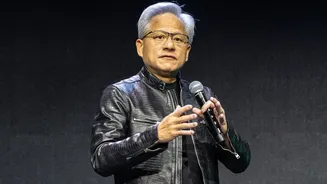
The phrase 'new leadership' became an abrupt reality for Nvidia in mid-November 2026. Co-founder Jensen Huang, a revered figure in the tech world, resigned as President and CEO. The board appointed Colette Kress, the company's long-serving Chief Financial
Officer, as interim CEO while a search for a permanent successor begins. This unexpected transition comes at a time of unprecedented growth and, now, heightened scrutiny. Kress and the board have sought to reassure investors that the company's ambitious product roadmap and customer commitments will continue without interruption, but the departure of a visionary founder inevitably raises questions about long-term execution and strategy.
A Strategy Measured in Billions
At the heart of the debate is Nvidia's staggering financial commitment to AI infrastructure. The company has poured tens of billions into direct equity investments in key AI players like OpenAI and Anthropic, alongside AI cloud service providers such as CoreWeave and Nebius. These aren't just investments; they are strategic moves to secure demand for its chips and systems. In 2026 alone, Nvidia has invested nearly $50 billion across top AI labs and committed to a portfolio of equity investments that reached $99 billion by late July. This aggressive spending is designed to create and dominate the ecosystem, ensuring that its hardware is the default choice for the AI revolution.
Building the 'AI Factories' of Tomorrow
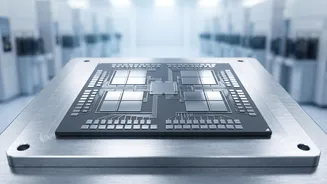
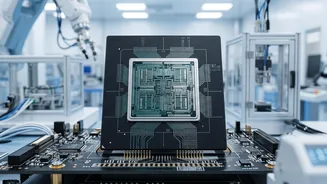
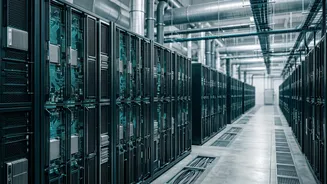
The vision, as articulated by former CEO Jensen Huang before his departure, is to build the next layer of global infrastructure, akin to electricity or the internet. This involves more than just selling GPUs; it's about providing full-stack systems—chips, networking, and software—to create 'AI factories'. To fund this, Nvidia has even partnered with financial giants like BlackRock and KKR to establish platforms that aim to mobilize over $500 billion in third-party capital for data center construction. The scale is immense, with partners like Meta planning capital expenditures of up to $135 billion in 2026, much of it on Nvidia-powered systems. The goal is to build out the massive compute capacity needed to power everything from large language models to future 'superintelligence' roadmaps.
The Sobering Questions from Wall Street
While the vision is grand, investors are beginning to ask tough questions about the returns on these colossal investments. Analysts are now scrutinizing whether the enormous capital expenditures by Nvidia and its customers are generating proportional profits. The market is shifting from rewarding spending to demanding proof of monetization. Concerns are also growing about a potential slowdown in AI spending, competitive pressure from customers like Google and Amazon developing their own chips, and the impact of geopolitical tensions on the supply chain. Furthermore, some analysts project that Nvidia's gross margins, while still extraordinarily high, are expected to decline slightly as the company sells more complex, full-rack systems instead of just individual chips.
Navigating a High-Stakes Future
Nvidia's new leadership team is steering a ship that is more powerful than ever but is also sailing into more turbulent waters. The company's strategy is a high-stakes bet that the demand for AI compute will not just continue, but accelerate exponentially. Interim CEO Colette Kress must now prove that Nvidia's spending is a necessary investment in future dominance, not a sign of peak hype. The company's success now depends on its customers' ability to turn these AI factories into profitable businesses. The next few quarters will be critical in determining whether Nvidia can maintain its incredible growth trajectory without its founding visionary at the helm, proving that the foundation he built is strong enough to support the future he imagined.