







A Living Legend in the Hills
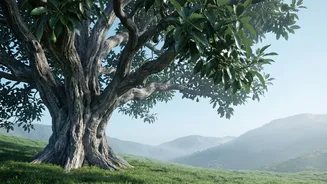
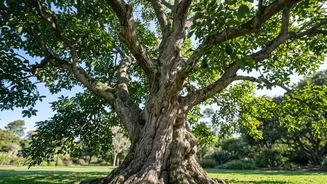
Deep in the Eastern Himalayas, within regions like Kalimpong and Sikkim, ancient avocado trees are a common sight in kitchen gardens, locally known as 'kothey bari'. For generations, these trees have been quiet providers, their presence woven into the fabric
of local life. Some of these botanical elders are said to be over 100 years old, positioning them as some of the first of their kind to take root in Indian soil. This claim to antiquity makes them more than just fruit-bearers; they are living artifacts of India’s horticultural history, symbols of a successful experiment that brought a Central American fruit to the Himalayan foothills. The local narrative, passed down through families, often ties their origin to the British colonial era, a time when many exotic plants were introduced to the region's temperate climate.
The Story Behind the Claim
The reported age of these trees is largely based on local history and anecdotal records rather than a formal birth certificate. The timeline aligns perfectly with the known history of the avocado's introduction to India. Historical accounts suggest the fruit, often called 'butter fruit', was brought to the country from Sri Lanka in the early 20th century. Simultaneously, American missionaries were introducing avocado varieties to the hill stations of South India around the same period, between 1906 and 1940. This historical window makes the existence of a centenarian avocado tree entirely plausible. A sapling planted around 1920 would now be comfortably over a century old, making it a direct link to the very first wave of avocados that arrived on the subcontinent. The claim, therefore, isn't just folklore; it's rooted in a verifiable period of agricultural expansion.
Seeds of Scientific Doubt
This is where the story gets complicated. While the historical timeline is plausible, scientifically proving the tree's exact age is another matter entirely. The most common method for dating a tree is dendrochronology, which involves counting the annual growth rings in its trunk. In temperate climates with distinct seasons, trees produce one light and one dark ring each year, creating a reliable calendar. However, in tropical and subtropical regions like the Himalayan foothills, this method is often unreliable. The consistent weather, marked by wet and dry spells rather than cold winters, can cause trees to produce multiple rings in a single year or none at all. This makes a simple ring count misleading. Without clear annual rings, scientists would need to turn to more complex and expensive methods like radiocarbon dating, a step rarely taken for a single fruit tree. The 'question' about the tree's age is therefore less of a dispute and more of a scientific conundrum.
The Avocado's Journey to India
The story of this single tree is a chapter in the avocado's much larger Indian saga. Native to Mexico and Central America, the fruit was a stranger to Indian palates until the early 20th century. Its introduction wasn't a single event but a series of efforts across the country. While it found a home in the hills of Sikkim and Kalimpong, it was also cultivated in Tamil Nadu, Kerala, and Karnataka. For decades, it remained a niche fruit, largely unknown outside the regions where it was grown. An interesting historical footnote from 1935 reveals that the spiritual guru Paramahansa Yogananda attempted to send avocado saplings from California to Mahatma Gandhi, who was interested in its nutritional potential, though the saplings sadly perished en route. This widespread, if initially quiet, introduction explains why pockets of old avocado trees exist across different parts of India, each with its own unique history.
A Symbol of Agricultural Heritage
Ultimately, whether the tree is precisely 105 or just 95 years old is less important than what it represents. Its gnarled trunk and continued fruiting are a testament to the adaptability of nature and the foresight of the horticulturists and farmers who first planted it. It stands as a symbol of India's rich and diverse agricultural heritage, a living bridge to a time when our food landscape was being shaped by global exchanges. The debate around its age serves a valuable purpose: it highlights the fascinating intersection of local history, botanical science, and the challenges of verifying the past. The tree is not just a source of fruit but a source of stories, sparking curiosity about the origins of the food on our plates.