


A Rulebook for Exploring New Worlds
When we explore space, we don't want to accidentally contaminate other worlds with life from Earth, nor do we want to bring something alien back home. This is the core principle of 'planetary protection'. It’s an interstellar version of visiting a pristine
national park and being asked not to leave anything behind. For decades, the Moon was considered a low-risk destination. Its surface is blasted by intense ultraviolet (UV) radiation and experiences wild temperature swings, creating a lethal environment for most known life. Because of this, missions to the Moon have generally had simpler requirements, mostly just involving documentation. However, as our focus shifts to specific, unique locations on the Moon, that simple approach is now being questioned.
The Moon’s Frozen Time Capsules
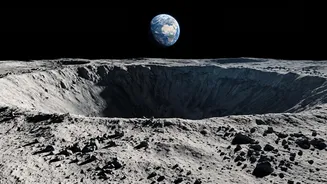
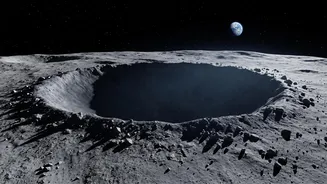
The lunar south pole is a game-changer because of its 'permanently shadowed regions' (PSRs). These are craters and depressions that haven't seen direct sunlight in billions of years. Temperatures inside these craters are incredibly cold, hovering below -160°C. These extreme conditions are perfect for preserving water ice. For scientists, this ice is a potential treasure chest. It could contain a pristine record of the solar system's history, including materials delivered by comets and asteroids, and clues to the origin of Earth's oceans. For future explorers, this water is a vital resource. It could be converted into drinking water, breathable oxygen, and even rocket fuel, making long-term lunar bases economically feasible. This dual value—as both a scientific archive and a resource hub—makes the PSRs uniquely important.
What the New Research Uncovered
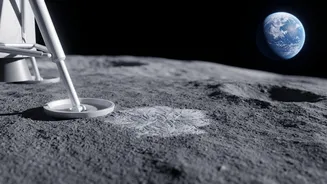
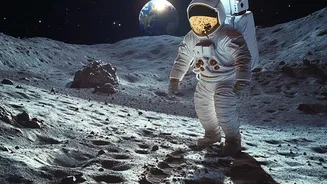
Recent NASA-led research, published in journals like Science Advances, has thrown a wrench in our old assumptions. Using models based on data from the Lunar Reconnaissance Orbiter, scientists simulated whether common Earth microbes could survive the south pole's environment. The results were startling. Previous models that treated the Moon as a flat surface found survival unlikely. But when the new study incorporated topography—the nooks, crannies, and shadows of the polar craters—it found that these areas offer significant protection from lethal radiation. The research shows that some hardy microbes, including common bacteria and fungi like Aspergillus niger (a type of black mould), could survive for weeks or even months in these shaded niches. Even an astronaut's boot print could create a tiny, temporary haven for microbial life. This suggests the lunar poles are far less hostile to earthly contamination than previously believed.
The Questions Facing Future Missions
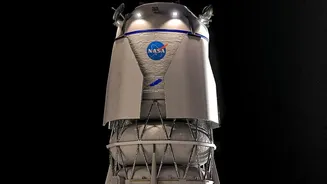
This discovery creates a dilemma for NASA and other space agencies. The primary risk isn't a lunar mould outbreak; the conditions are still too extreme for microbes to grow or spread. The real danger is scientific contamination. If we introduce Earth microbes into the same icy layers scientists want to study for signs of prebiotic chemistry, we could corrupt the data forever. How could we know if an organic molecule we find is truly lunar or just a hitchhiker from the landing craft? This forces a difficult conversation. Should the PSRs be treated as 'sensitive locations' with much stricter sterilisation protocols, similar to missions searching for life on Mars? In 2020, NASA did assign this status to PSRs, but the practicalities are complex. Stricter cleanliness standards add enormous cost and complexity to missions. It creates a tension between the need to explore and utilise lunar resources and the equally important need to preserve these unique environments for science. Finding the right balance between 'move fast and use things' and 'preserve and study' is now a critical question for the Artemis generation.