




An Unavoidable Chokepoint
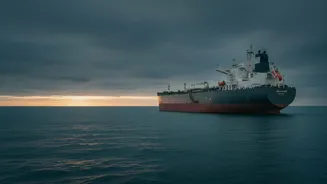
At its narrowest point, the Strait of Hormuz is just 39 kilometres wide, connecting the Persian Gulf to the open ocean. Yet through this slender passage flows roughly one-fifth of the world's daily petroleum consumption. This includes massive volumes
of crude oil and liquefied natural gas (LNG) from Gulf giants like Saudi Arabia, the UAE, Kuwait, Iraq, and Iran itself. There are very few practical alternatives for bypassing the strait. This geographic reality gives the waterway immense strategic power. Any disruption, real or threatened, can send shockwaves through global energy markets, causing prices to spike and jeopardising energy security for nations thousands of miles away.
A History of Confrontation
The strait has been a theatre of conflict for centuries, but its modern history is defined by the tense US-Iran relationship. During the 1980s Iran-Iraq War, the waterway became a battlefield in the “Tanker War,” where both sides attacked commercial vessels. This period saw direct US military involvement, including Operation Praying Mantis in 1988, a large-scale naval battle against Iranian forces. In the decades since, the pattern has continued. Iran's Islamic Revolutionary Guard Corps (IRGC) Navy has frequently used its proximity to the strait to harass, seize, or attack commercial ships as a form of asymmetric leverage against US pressure, particularly in response to sanctions. These incidents serve as constant, dangerous reminders of how quickly a diplomatic spat can escalate into a military clash in these confined waters.
Diplomacy Under the Shadow of Warships
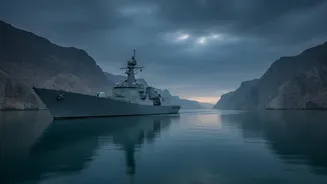
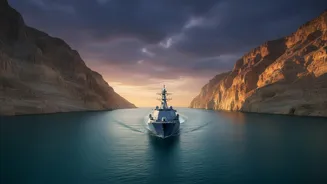
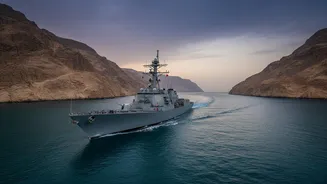
Every attempt at diplomacy between Washington and Tehran occurs under the shadow of this military reality. For Iran, control over the strait is a powerful deterrent and a point of national pride. Threats to close the waterway, even if not fully acted upon, are a way for Tehran to assert its influence and create leverage that it otherwise lacks against the United States' overwhelming conventional military and economic power. For the US, ensuring freedom of navigation through Hormuz is a non-negotiable principle, backed by the formidable presence of the US Navy's Fifth Fleet. This fundamental clash of interests means that any diplomatic overture is immediately tested. A potential deal can be sabotaged by an incident at sea, and any naval posturing in the Gulf can be interpreted as a signal of bad faith, poisoning negotiations before they even begin. Recent history is filled with examples of talks being derailed by events in the strait.
Why It Matters for India
For India, the stability of the Strait of Hormuz is not a distant geopolitical issue; it is a vital national interest. A significant portion of India's crude oil and LNG imports, the lifeblood of its growing economy, travels through this very passage. Any disruption directly impacts India's energy security, risking higher inflation and economic instability. New Delhi is forced to perform a difficult diplomatic balancing act. It must maintain its long-standing ties with Iran while also cultivating strategic partnerships with the US and Gulf Arab nations. Past US sanctions on Iran have already complicated India's energy procurement, forcing it to diversify its sources. The Indian Navy has also stepped up its presence in the region with initiatives like Operation Sankalp, aiming to safeguard Indian-flagged vessels and protect its crucial energy supply lines.