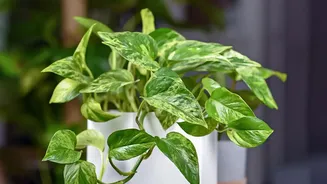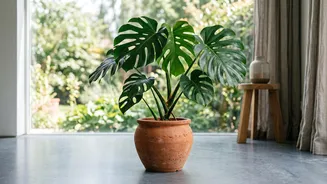



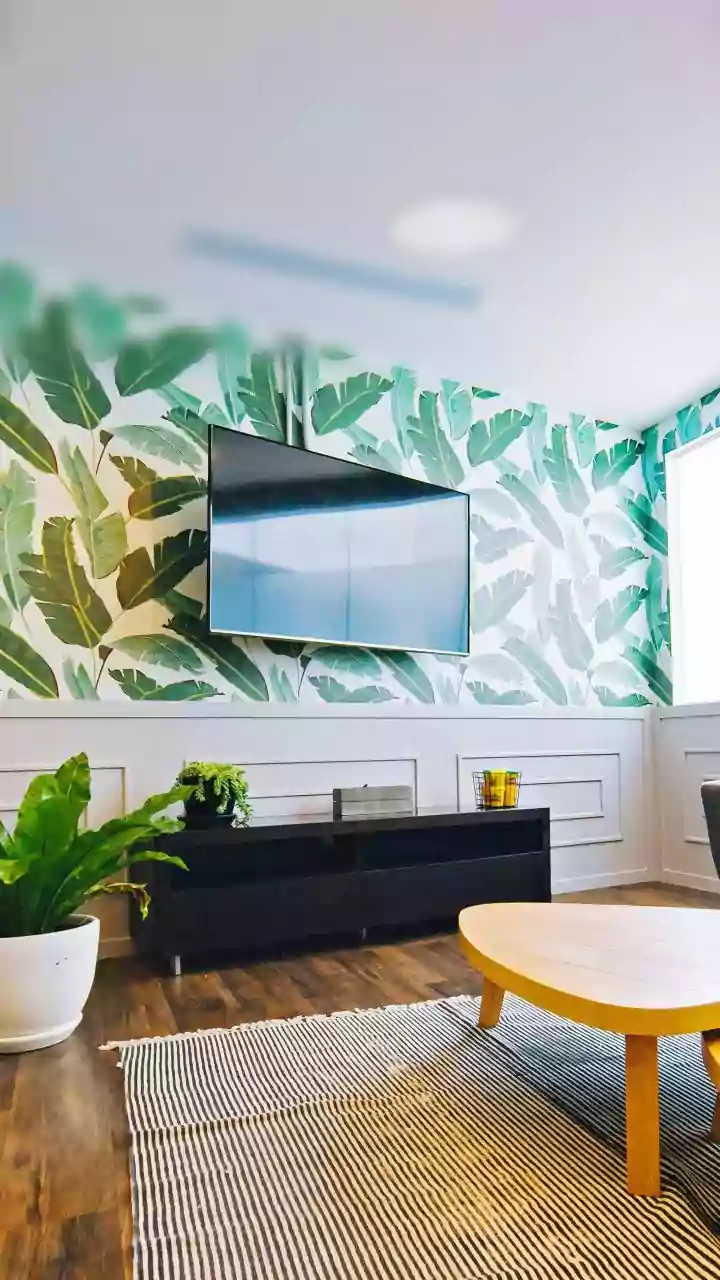
The idea of a home filled with lush, green plants creating a personal oasis of pure air is a powerful and popular one. But while we've embraced houseplants as natural air purifiers, recent scientific reviews are asking us to look closer.
The Famous NASA Experiment
The belief that
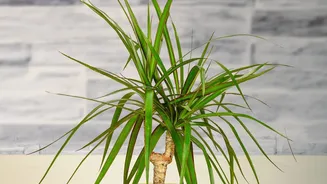
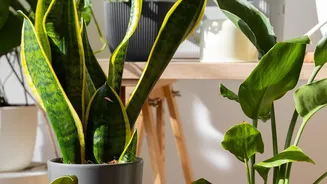
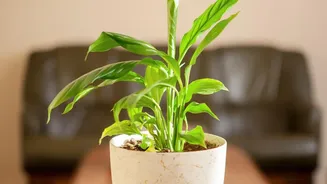
houseplants can scrub the air of pollutants largely stems from a landmark 1989 NASA study. Researchers, looking for ways to clean the air in sealed environments like space stations, placed various common houseplants in small, airtight chambers. They then introduced volatile organic compounds (VOCs) such as formaldehyde and benzene—chemicals commonly released from furniture, paints, and cleaning supplies. The results were promising: some plants were able to remove a significant percentage of these pollutants from the sealed chamber's air over a 24-hour period. Plants like the Peace Lily, Spider Plant, and various Dracaenas became famous as 'air-purifying' champions, and the idea quickly took root in public consciousness.
From a Sealed Lab to Your Living Room
The problem, as subsequent research has pointed out, is that your living room is not a sealed NASA chamber. A pivotal 2019 review published in the Journal of Exposure Science & Environmental Epidemiology re-examined the data from decades of these chamber studies. The authors, Bryan Cummings and Michael Waring, noted that real homes have much higher air exchange rates. Air is constantly flowing in and out through windows, doors, cracks, and ventilation systems. This natural ventilation dilutes and removes VOCs far more rapidly and effectively than a few potted plants can absorb them. The controlled conditions that made the plants look so effective in the lab simply do not apply to the complex, dynamic environment of a typical building.
The Sobering Numbers
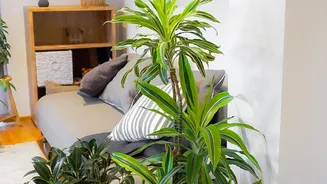
To put the effect into perspective, the 2019 review calculated just how many plants you would need to make a real difference. Their conclusion was stark: to achieve the same air-cleaning rate as a building's standard ventilation, you would need to place between 10 and 1,000 plants on every single square metre of floor space. In a small room, you might need five plants just to reduce levels of a pollutant like nitrogen dioxide by 20% in a polluted environment, and that's only if the room is poorly ventilated. For most homes, the impact of a reasonable number of houseplants on VOC levels is considered negligible. The most effective way to improve indoor air quality remains dealing with pollution at its source and ensuring good ventilation by opening a window.
So, Should You Ditch Your Plants?
Absolutely not. While they may not be the air-purifying powerhouses we once thought, indoor plants offer a host of other well-documented benefits. A significant body of research shows that the presence of plants can have a profound positive impact on our mental health. Studies have demonstrated that being around greenery, even indoors, can reduce stress, anxiety, and feelings of depression. Interacting with plants can suppress the body's stress response and induce feelings of calm. Furthermore, plants can boost productivity, improve focus, and even make a space feel more comfortable by modestly increasing humidity levels. They provide a vital connection to nature, which is especially important for those without access to outdoor garden spaces.