






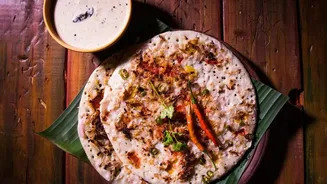
A Dish Steeped in History
Appam, also known as 'hoppers' in Sri Lanka, is a beloved staple in the Indian states of Kerala and Tamil Nadu. Its history is as rich and layered as its texture. Food historians trace its origins back centuries, with some theories pointing to the Jewish
communities of Kerala and others finding mentions in ancient Tamil Sangam literature. Regardless of its exact birthplace, the appam has been a cornerstone of South Indian and Sri Lankan cuisine for generations, often prepared for breakfast or dinner. It’s a dish that connects communities, with strong cultural links to the Syrian Christians of Kerala, who traditionally make it a part of festive meals and celebrations.
The Art of the Batter
The magic of the appam begins with its batter, a simple yet precise mixture of fermented rice and coconut milk. Traditionally, the fermentation process was kickstarted by adding 'toddy,' a local palm wine, which lent a unique, slightly sour tang. Today, yeast is more commonly used, but the goal remains the same: to create a light, airy batter that bubbles and grows. This fermentation process, which can take several hours, is crucial for developing the appam's signature honeycomb texture and complex flavour profile. The combination of rice flour and coconut is what gives the pancake its delicate sweetness and comforting aroma, a hallmark of Keralan cooking.
The Perfect Shape and Texture
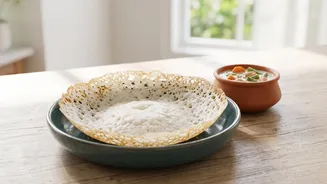
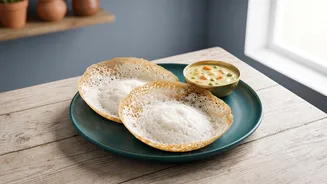
What truly sets the appam apart is its distinctive bowl shape, achieved by using a special pan called an 'appachatti'. This small, deep, wok-like pan is the key to creating the appam's dual texture. A ladle of batter is poured into the centre of the hot pan and then expertly swirled around. This motion allows a thin layer of batter to coat the sides, which cooks into a golden-brown, crispy, and lace-like edge. The rest of the batter pools in the bottom, steaming under a lid to form a thick, soft, and spongy centre. The result is a delightful contrast in every bite—a crisp perimeter giving way to a pillow-soft middle.
More Than Just One Appam
While the plain appam (Vellayappam) is a classic, there are several delicious variations to explore. Palappam is a richer version where thick coconut milk is added to the batter, making the centre even softer and sweeter. One of the most popular variations is the 'egg appam' or 'mutta appam', where an egg is cracked into the centre of the pancake as it cooks, creating a built-in sunny-side-up. For those with a sweet tooth, there are versions made with jaggery and served with sweetened coconut milk, turning the humble pancake into a delightful dessert. Other related dishes in the appam family include Idiyappam (string hoppers) and the sweet, fried Neyyappam.
How to Best Enjoy It
Appam is incredibly versatile and pairs wonderfully with a wide array of side dishes. The most classic accompaniment is a vegetable stew, known as 'ishtew' in Kerala. This mildly spiced, creamy curry made with potatoes, carrots, and green peas in a coconut milk base perfectly complements the subtle sweetness of the appam. Another popular choice is 'kadala curry,' a robust and spicy gravy made with black chickpeas. Other fantastic pairings include chicken or mutton stew, fish molee (a fragrant fish curry with coconut), or a simple egg roast. For a simpler treat, many enjoy it just with a sprinkle of sugar and a side of sweetened coconut milk.