






Why Your Body Needs Fibre
Dietary fibre is an essential component of a healthy diet, yet many people don't get enough. The Indian Council of Medical Research (ICMR) suggests adults should aim for at least 30 to 40 grams of fibre daily, but average intake is often much lower. Fibre
is crucial for maintaining a healthy digestive system, preventing constipation, and feeding the beneficial bacteria in your gut. A high-fibre diet can also help with weight management by keeping you feeling fuller for longer, and it plays a role in lowering cholesterol, managing blood sugar levels, and reducing the risk of chronic diseases like heart disease and type 2 diabetes.
Start with a Smart Yoghurt Base
The foundation of your bowl matters. Opting for plain, unsweetened yoghurt, particularly Greek yoghurt, provides a fantastic, protein-rich starting point. Protein contributes to satiety, helping to keep you full and satisfied until your next meal. Plain yoghurt also gives you a blank canvas, allowing you to control the sugar content and customise the flavours with your toppings. While yoghurt itself isn't a major source of fibre, it acts as the perfect creamy vehicle for high-fibre additions.
The Power of Oats
Oats are a true fibre workhorse and one of the easiest ways to bulk up your bowl. Just half a cup of dry rolled oats can provide around 4 grams of fibre. Oats contain a special type of soluble fibre called beta-glucan, which is particularly effective at helping to lower cholesterol. You can use various types of oats. Rolled oats offer a pleasant chewiness, whether added raw or quickly cooked. You can also prepare them the night before by soaking them in milk or yoghurt for a creamy, ready-to-eat breakfast. Even stirring a few tablespoons of oat bran into your yoghurt can significantly increase its fibre content.
Seeds: Tiny Nutritional Giants
Don't underestimate the power of seeds. They are incredibly nutrient-dense and an excellent way to add fibre, healthy fats, and protein to your yoghurt bowl. Chia seeds are a standout, with a single tablespoon containing about 5 grams of fibre. When added to liquid or yoghurt, they form a gel, which adds a thick, pudding-like consistency. Flaxseeds are another excellent source, but they should be ground to allow your body to absorb their nutrients, including omega-3 fatty acids. Pumpkin seeds and sunflower seeds add a satisfying crunch, along with additional fibre and minerals.
How to Build Your Perfect Bowl
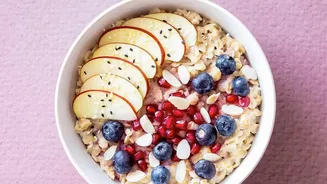
Creating a balanced, high-fibre yoghurt bowl is simple. Start with about a cup of your chosen plain yoghurt. Stir in one to two tablespoons of chia seeds or ground flaxseeds. Top with a quarter to a half cup of rolled oats. From there, the possibilities are endless. Add a handful of berries for extra fibre and antioxidants. A small sprinkle of nuts like almonds adds more fibre and a satisfying crunch. A drizzle of honey or a few pieces of fruit can provide natural sweetness. By combining these elements, you can easily create a breakfast containing 10-15 grams of fibre or more, getting you well on your way to meeting your daily needs.