






A Planet Hiding in Plain Sight
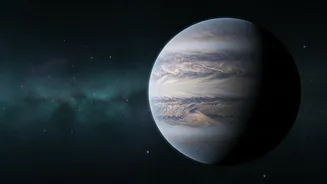
Astronomers have uncovered a new giant exoplanet, Beta Pictoris d, hidden within one of the most studied planetary systems in our galaxy. The nearby young star, Beta Pictoris, was already known to host two massive planets. This new discovery makes it only
the second system known to have at least three directly imaged planets. However, this time was different. Instead of spotting the faint dot of a planet, scientists found Beta Pictoris d by detecting something incredible: the specific chemical fingerprint left by its atmosphere on the light Webb captured. This groundbreaking technique could revolutionize the search for worlds around other stars, especially those obscured by dust and debris.
What is a Chemical Fingerprint?
Imagine starlight as a pure, white light. When a planet passes in front of its star, some of that light travels through the planet’s atmosphere before reaching us. The gases in the atmosphere—like water vapour, methane, or carbon dioxide—absorb very specific colours, or wavelengths, of that starlight. What reaches Webb’s sensitive instruments is starlight with certain colours missing. These missing slivers of light create a unique pattern, like a barcode. Each element and molecule has its own distinct barcode, or “chemical fingerprint.” By analysing this barcode, scientists can determine exactly what an alien atmosphere is made of, even from hundreds of light-years away.
Decoding an Alien Atmosphere
For Beta Pictoris d, Webb’s powerful spectrographs spread the incoming light into a rainbow, revealing the tell-tale signs of carbon monoxide, water vapour, and methane. This is the first time a planet has been discovered and confirmed using this atmospheric analysis method alone. Previously, scientists had to spot the planet first and then study its atmosphere. This discovery flips the script, showing that we can find planets by looking for their atmospheres first. This is a monumental step forward, proving the incredible capability of the JWST to conduct investigations hoped for by the scientific community.
A Technological Marvel at Work
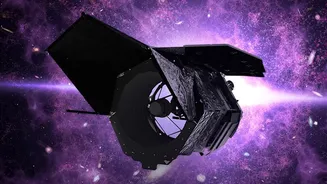
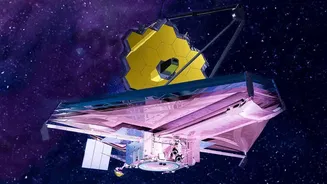
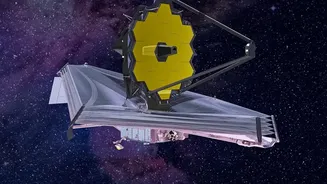
This breakthrough is only possible because of the James Webb Space Telescope's unparalleled design. Orbiting a million miles from Earth, its massive mirror and highly sensitive infrared instruments are shielded from the Sun's heat, allowing them to stay incredibly cold. This is crucial for detecting the faint infrared light from distant planetary systems. While other telescopes, including Hubble, have identified some atmospheric ingredients before, Webb provides a full, high-resolution menu of atoms and molecules. It can pick up chemical fingerprints that are completely invisible to other observatories, opening a new window into the composition of distant worlds. This capability transforms a massive technological investment into priceless scientific knowledge.
The Future of Planet Hunting
The discovery of Beta Pictoris d is more than just adding another planet to the catalogue. It’s a powerful proof-of-concept that will shape the future of astronomy. By searching for atmospheric signatures, scientists can now hunt for planets in places they couldn’t before, like in systems crowded with dusty debris that would otherwise hide a planet from direct view. This technique is a crucial step towards one of day's greatest scientific quests: analysing the atmospheres of smaller, rocky, Earth-like planets for the chemical signatures that might indicate the presence of life. While Beta Pictoris d is a gas giant and not a candidate for life, the method used to find it paves the way for future discoveries that could change our understanding of the universe and our place in it.