






From Consumer Tech to Core Infrastructure
The first wave of AI in India was largely consumer-facing, focused on improving digital experiences. While these applications are important, the next chapter of India's AI story is about tackling systemic, physical-world challenges. The focus is shifting
from convenience to core functions of the economy, including infrastructure, manufacturing, and public administration. This involves deploying AI in industrial environments where safety, reliability, and measurable outcomes like productivity and efficiency are the primary goals. This transition sees AI not as an isolated experiment, but as a tool integrated into the very fabric of the nation's physical assets.
Paving the Way with Smarter Roads
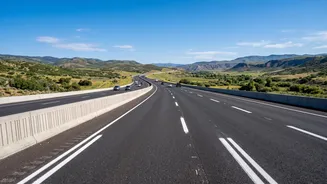
India's vast road network, the second largest in the world, is becoming a key testing ground for industrial AI. Instead of reactive maintenance, authorities are turning to proactive, data-driven solutions. Startups and government bodies are using AI-powered systems to monitor and manage road health. For instance, platforms like Rasta.AI use cameras on vehicles to scan roads, with AI algorithms identifying and even predicting potholes and cracks before they become serious hazards. This approach has been shown to reduce inspection costs by up to 90%. On a larger scale, initiatives like Project iRASTE (Intelligent Solutions for Road Safety through Technology and Engineering) in cities such as Nagpur and Telangana use AI to create a safer driving environment. By analysing data from vehicle-mounted cameras, the system can provide real-time alerts to drivers about potential collisions, lane departures, and driver drowsiness, effectively aiming to reduce accidents by predicting risks. In late 2026, the government also announced plans for a nationwide AI-based traffic management system to optimize traffic flow and reduce congestion on national highways.
Digitising Centuries of Land Records
Property ownership in India has long been a complex issue, with fragmented records, handwritten ledgers, and disputes clogging up the judicial system. Now, AI is being deployed to bring order to this chaos. The government's SVAMITVA scheme, launched in 2020, is a prime example. It uses drones to map rural inhabited lands with high precision, creating accurate digital records. AI is then used to automatically extract features like property boundaries and road networks from this high-resolution imagery. This process, which combines drone technology, GIS, and AI, helps in creating property cards for rural homeowners, allowing them to use their property as a financial asset. Startups are also entering this space. Companies like Landeed use computer vision and natural language processing to digitise millions of paper land records, reducing the time for title verification from weeks to mere minutes. The goal is not for AI to decide ownership, but to create a reliable and auditable pipeline of evidence that humans can verify much faster.
The Blueprint for a 'Tech-Driven' Nation
These applications in roads and land titles are part of a broader vision for a digitally empowered India. Initiatives like the IndiaAI Mission, allocated over ₹10,000 crore, aim to build a robust ecosystem for AI development and adoption. This includes creating massive computing infrastructure, promoting AI-focused startups, and developing frameworks for safe and ethical AI use. The strategy is to integrate AI into the country's Digital Public Infrastructure—the foundational platforms like Aadhaar and UPI that have already transformed service delivery. By applying AI to fundamental sectors, the government aims to enhance administrative efficiency, improve public services, and drive economic growth, moving from isolated pilot projects to scalable, nationwide systems.