









AI's Unprecedented Thirst
Artificial intelligence, particularly the large language models and generative systems that have captured the world's imagination, is incredibly hungry for two things: data and processing power. To handle the colossal datasets and parallel computations
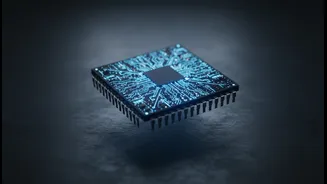
required for training and inference, AI systems rely on specialized hardware. At the heart of this hardware is a component that has become one of the most critical and constrained resources in the global economy: high-bandwidth memory, or HBM. This isn't the standard memory in your laptop; HBM is a sophisticated, high-performance marvel that acts as a super-fast highway for data moving in and out of the main AI processor. Demand is staggering, with projections showing the market for HBM growing exponentially. Some analysts forecast that HBM demand for certain AI chips will grow by a factor of 35 between 2024 and 2028.
The Memory of the Moment: HBM
High-Bandwidth Memory is a marvel of engineering, where DRAM chips are stacked vertically to create a component that offers massive bandwidth in a small, power-efficient package. This architecture is essential for preventing data bottlenecks that would otherwise cripple the performance of advanced AI accelerators from companies like Nvidia. The market is dominated by just three main suppliers: SK Hynix, Samsung, and Micron. As of early 2026, SK Hynix holds a dominant market share, thanks to its early lead in the latest HBM generations. These companies are in an enviable position, with their entire HBM supply reportedly sold out well into the future, allowing them to command premium prices and enjoy record profit margins. This has led them to prioritize production of high-margin HBM over the conventional memory used in PCs and smartphones, creating shortages and price hikes in other sectors of the electronics industry.
The Billion-Dollar, Multi-Year Puzzle
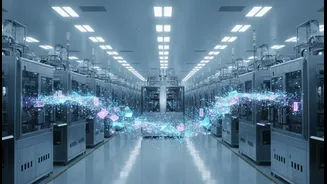
If demand is so high, why not just build more factories? This is where digital speed meets physical friction. A modern semiconductor fabrication plant, or "fab," is arguably the most complex and expensive manufacturing environment on Earth. A single new fab can cost anywhere from $10 billion to over $25 billion, and the timeline from groundbreaking to producing the first chip is typically three to five years. These are not just buildings; they are colossal, ultra-clean environments. The most advanced fabs feature cleanrooms the size of multiple football fields where the air is thousands of times cleaner than an operating room, as even a single speck of dust can ruin a batch of microchips. Building this level of precision on such a massive scale is a monumental undertaking.
A Logistical Gauntlet
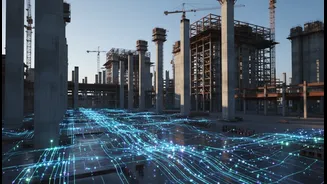
The challenges go far beyond pouring concrete. Fab construction requires thousands of highly skilled workers, from pipefitters who can install ultra-pure water systems to electricians capable of managing city-level power loads. There is a global shortage of this specialized labor, which has already led to delays at several high-profile projects in the U.S. and Europe. Furthermore, a fab is useless without the specialized equipment inside, which itself has incredibly long lead times. The most advanced lithography machines, essential for etching microscopic circuits and produced by a single company, ASML, have a backlog of 18 months or more. Even securing permits for the immense water and power a fab requires can take years, sometimes longer than building the facility itself.
The Race to Catch Up
In response to geopolitical risks and the supply chain vulnerabilities exposed in recent years, governments are pouring billions into incentives like the CHIPS Act in the United States to encourage domestic production. As a result, a historic construction boom is underway, with major players like TSMC, Intel, Samsung, and Micron building massive new fab complexes in states like Arizona, Ohio, and Texas. Dozens of new fabs are slated to begin construction globally. However, these are long-term solutions to a right-now problem. Many of the fabs beginning construction in 2025 won't start meaningful production until 2026 or 2027 at the earliest. This means the fundamental mismatch between immediate AI demand and the slow, deliberate pace of industrial construction is set to define the tech landscape for the next several years.