




An Unprecedented Catastrophe
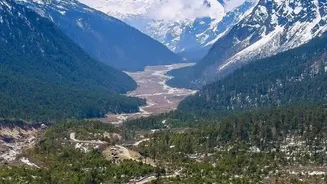
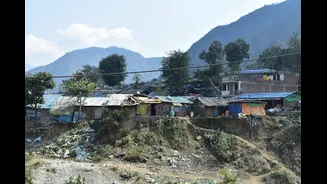
In August 2026, a massive section of rock and the overlying glacier collapsed near Nepal's border with China. The event triggered a terrifying torrent of water, ice, and debris that tore through the Trishuli River corridor at incredible speeds, wiping
out entire communities. Reports indicate that the disaster resulted in more than 1,300 deaths, with thousands more remaining missing. The sheer scale of the deluge, which traveled at speeds nearing 180 kilometers per hour, highlights a new and frightening reality for those living in the shadow of the world's highest peaks.
The Science of a Destabilized Mountain
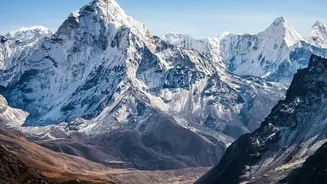
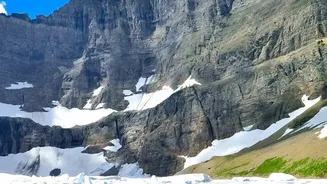
A rapid-analysis report from the World Weather Attribution group concluded that human-caused global warming was a significant factor. While not the sole cause, long-term warming created the preconditions for the disaster. The science points to two critical processes. First, rising temperatures are causing Himalayan glaciers to thin at an alarming rate, losing about half a meter of thickness each year since 2000. This retreat removes a vital buttress of ice that supports steep mountain slopes. Second, the warming is causing high-altitude permafrost—the permanently frozen ground that acts like cement for rock and soil—to thaw. This thawing weakens the structural integrity of the mountains themselves, making catastrophic landslides more likely.
What the New Study Found
Researchers found that the region where the collapse occurred has warmed by about 2 degrees Celsius since pre-industrial times. In the days leading up to the disaster, local temperatures were a staggering 5 degrees above the 30-year average. This intense warmth accelerated the melting processes. The study clarifies this was not a simple weather event but a geological one, amplified by climate change. The warming trend pushed the freezing line higher up the mountains by about 100 meters per decade, exposing previously frozen rock faces to thawing and weakening. While a major earthquake in 2015 may have also weakened the slope, the study emphasizes that the fingerprints of climate change are clearly visible in the long-term degradation of the mountain environment.
A Wake-Up Call for the Entire Region
This disaster is not an isolated incident but a stark warning for the entire Hindu Kush Himalaya region, often called the 'Third Pole'. Similar cascading events, where one hazard triggers another, have occurred in Uttarakhand in 2021 and Sikkim in 2023, causing immense devastation. The mechanisms at play in Nepal—thinning glaciers, thawing permafrost, and unpredictable weather—are present across the mountain range, putting millions of people in India, Pakistan, Bhutan, and China at similar risk. Experts stress that traditional flood warnings, which focus on rainfall and river levels, are inadequate for these kinds of complex cryospheric hazards that begin high in the mountains without any obvious warning for downstream communities. The era of preparing for single, predictable hazards is over.