



A Summer of Unprecedented Fire
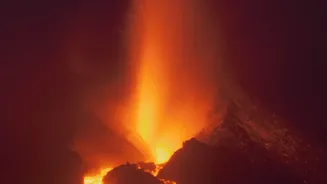
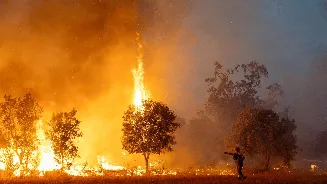
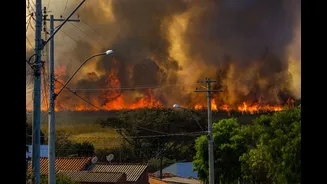
The scale of the fires across Western Europe in the summer of 2026 has been staggering. In France's Gironde region and Spain's central provinces like Ávila, fires have consumed tens, even hundreds of thousands of hectares. Authorities have described some
blazes as the largest in decades, or even in recorded history. The fires have been so intense they have generated their own weather systems, including fire-driven thunderstorms that create high winds and spread embers, accelerating the inferno. Mass evacuations have seen hundreds of thousands of residents and tourists displaced, with emergency shelters scrambling to provide support. This is not a typical wildfire season; officials on the ground and climate scientists agree this is a new, more terrifying reality.
The Firefighting Machine Under Strain
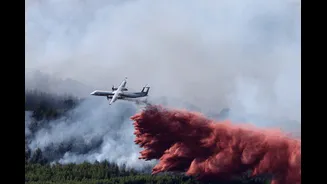
In response, a massive international effort has been mobilized. Firefighting planes and helicopters criss-cross the sky, and thousands of firefighters, including military units, work tirelessly on the ground. The European Union's Civil Protection Mechanism has been activated, with countries like Greece, Italy, and Croatia sending aircraft and personnel to support their neighbours. Yet, despite this impressive show of force and solidarity, the fires have continued to rage. The sheer number of simultaneous, large-scale incidents stretches resources thin. When multiple countries face the same crisis at once, the system of mutual aid begins to show cracks. Fire crews are battling not just flames, but also extreme exhaustion and the immense physical toll of working in heavy gear under scorching temperatures.
Exposing the Limits of Response
The headline-making blazes are exposing the fundamental limits of a purely reactive emergency response strategy. Firstly, there is a physical limit to resources. Even with the EU's shared rescEU fleet of aircraft, there is a finite number of planes and personnel. When fires of this magnitude ignite across the continent, these resources are simply spread too thin to be everywhere at once. Secondly, traditional firefighting tactics are becoming less effective. Climate change is creating conditions—extreme heat, prolonged drought, and powerful winds—that lead to fires behaving in ways that are more aggressive and unpredictable than ever before. This 'fire weather' makes it incredibly dangerous and sometimes impossible for ground crews to operate, and can render aerial water drops ineffective against the sheer intensity of the flames.
A Pan-European Problem
While France and Spain are the current epicenters, this is not their crisis alone. It is a pan-European, and indeed global, challenge. For years, countries across the Mediterranean have faced escalating fire seasons. Europe is the world's fastest-warming continent, a fact that is turning vast swathes of its southern landscape into a tinderbox. Scientific analyses have directly linked the increased likelihood of hot, dry, and windy conditions—the perfect fuel for wildfires—to human-caused climate change. The EU has bolstered its preparedness, pre-positioning hundreds of firefighters and creating strategic reserves of equipment. But even these forward-thinking measures are being tested by a crisis that is accelerating faster than the response can adapt.
Beyond Firefighting: A New Approach is Needed
The heroic efforts of firefighters on the front lines are undeniable. But the events in France and Spain show that heroism and water bombers alone cannot solve this problem. The blazes demonstrate that we are reaching the limit of what emergency response can achieve in the face of a fundamentally changed climate. Experts and officials are increasingly concluding that the focus must shift from solely fighting fires to proactively managing the risk. This involves aggressive climate action to curb emissions, as well as on-the-ground strategies like better forest management, creating fire breaks, restoring ecosystems to be more fire-resilient, and strengthening community preparedness to prevent fires from starting in the first place.