

The Art of Stillness and Stone
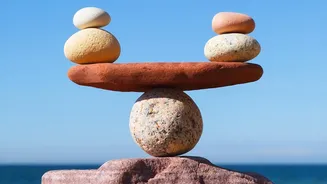
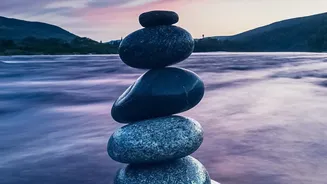
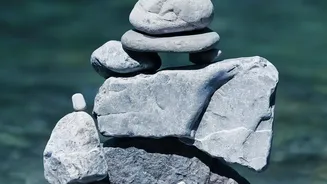
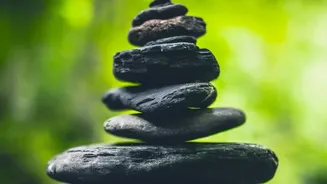
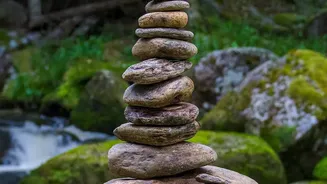
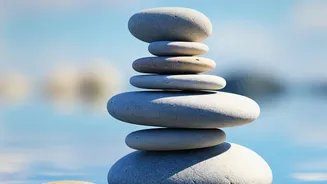
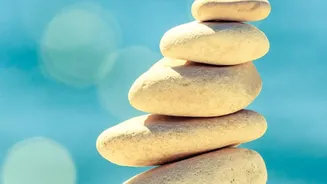
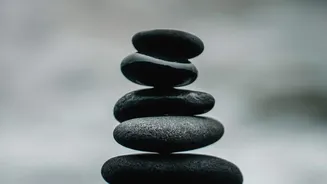
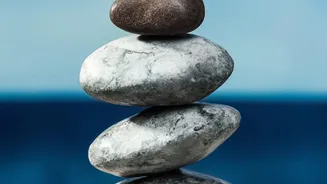
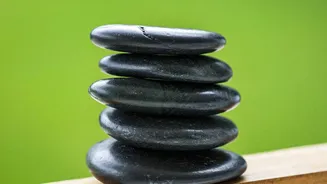
At its core, stone balancing is the practice of stacking rocks in physically improbable arrangements without using any adhesives, wires, or supports. It’s an ancient art form found across cultures, part meditation and part physics puzzle. The goal is to find
the natural centre of gravity for each stone, feeling out the minute indentations and contact points that allow it to rest in equilibrium. This isn’t about forcing a fit; it’s about listening to the stones, requiring a quiet mind and a steady hand. Practitioners describe it as a conversation with gravity, a dance between the physical properties of the rock and the unwavering focus of the balancer. Each successful stack is a fleeting masterpiece, a testament to patience and being completely present in the moment.
What 'Focused Attention' Really Is
Before we connect the dots to stone balancing, let’s clarify what psychologists mean by “focused attention.” Also known as sustained or selective attention, it is the fundamental cognitive ability to direct your mental resources to a single task or stimulus for a prolonged period while actively filtering out distractions. Think of a surgeon during a delicate procedure or an athlete keeping their eye on the ball, oblivious to the roaring crowd. This isn't just about 'paying attention'; it’s about your brain's executive function making a deliberate choice about what matters and what doesn't. In our hyper-connected lives, this skill is constantly under siege from notifications, multitasking pressures, and endless information streams. The ability to voluntarily control your focus is becoming a modern superpower.
How Balancing Forges a Focused Mind
Stone balancing is a practical, physical workout for your brain’s attention circuits. The activity demands that you shut out the world and zero in on one thing: the feeling of the stones. You must concentrate intensely on the subtle shifts in weight and the tiny vibrations that tell you when a rock is nearing its balance point. This act of intense, single-tasking is the very definition of a focused attention exercise. It forces you into a state of mindfulness, where your mind stops racing and becomes anchored to the present moment. Each time you make a tiny adjustment, you are strengthening the neural pathways responsible for concentration and cognitive control. The process is inherently meditative; it calms the nervous system, reduces stress, and fosters a deep sense of inner quiet.
Training Coordination, One Stone at a Time
The benefits extend beyond mental clarity to physical dexterity. Stone balancing is an exceptional activity for improving hand-eye coordination. The delicate process requires precise, controlled movements as you pick up, orient, and place each stone. Your brain must create a seamless link between what your eyes see—the shape of the rocks, the potential balance points—and what your hands feel. This constant feedback loop trains motor skills, enhancing your ability to perform tasks that require precision and a steady hand in all areas of life. Studies have shown a strong link between activities that challenge motor skills and the development of cognitive functions, including planning and problem-solving. By engaging in a physical puzzle like stone balancing, you are simultaneously honing your body and your mind.
A Simple Practice for a Scattered World
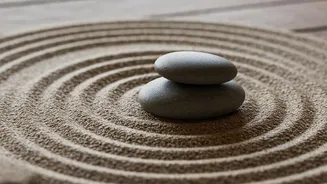
The beauty of stone balancing lies in its simplicity. You don’t need expensive equipment or special classes. All you need is a collection of stones and a quiet space, whether it’s a corner of your garden, a nearby park, or a riverbank. Beginners should start small, trying to balance just one or two rocks. The key is to be patient and let go of the outcome. Feel the texture and weight of each stone. Try to find three small points of contact—a tiny natural tripod—to create stability. Don't be discouraged if the stack tumbles; each collapse is a lesson in impermanence and an opportunity to begin again with renewed focus. The goal isn't to build a monument, but to find a few moments of profound stillness and concentration.