





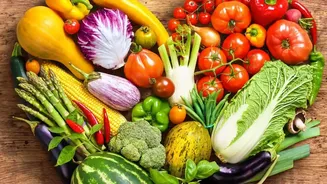
The Science of 'Eating With Your Eyes'
We've all heard the phrase 'you eat with your eyes first', and modern science confirms it. Visual cues are the very first pieces of information our brain processes when encountering food, long before smell or taste. This initial impression shapes our expectations
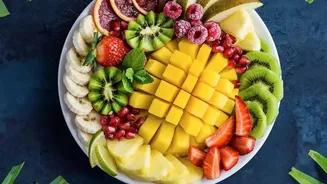
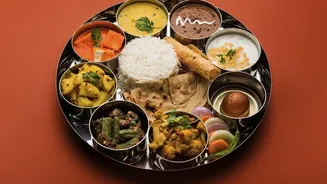
about everything from flavour to quality. Studies show that the aesthetics of food—its colour, arrangement, and even the plate it's served on—can significantly influence our perception of how healthy it is. For instance, the same meal can be perceived as more flavourful and appealing simply if it's arranged attractively. This happens because our brains are wired to associate things that are visually pleasing with positive attributes, and in the case of food, this often translates to 'healthier'.
The 'Neatness' Bias: Order on the Plate
One of the most powerful visual biases relates to order and symmetry. A study published in the 'Journal of Marketing' found that when food is presented in a neat, orderly, and symmetrical way, people perceive it as healthier and more natural than the exact same food presented in a messy pile. Researchers tested this with avocado toast; participants who saw a picture of neatly arranged avocado slices rated it as healthier than those who saw a picture of the same ingredients messily smashed together, even though the nutritional information was identical. The thinking is that classical aesthetics—like symmetry and patterns—are common in nature. Our brains create a shortcut: what looks more natural must be healthier. This extends to even subtle details, like whether a sauce is drizzled artistically or placed neatly on the side; one study found that separating the sauce made a fish dish seem significantly healthier to diners.
The Colour Code of Health
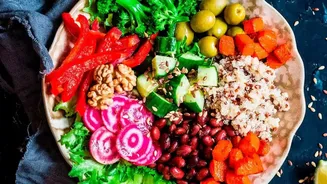
Colour is another major factor that sways our judgment. It is one of the most important visual cues affecting our perception of taste and health. We are conditioned to associate certain colours with health. Green, for example, is almost universally linked with vegetables, freshness, and low-calorie options. Marketers often use this to their advantage, using green packaging or presentation to give a product a 'health halo' it may not deserve. Conversely, a lack of naturally blue foods makes blue an unappetizing colour in most food contexts. The brain anticipates a sensory experience based on these colour cues, and that expectation can powerfully enhance—or diminish—how we perceive the food's nutritional value and even its flavour.
Beyond Looks: Portion Cues and Other Tricks
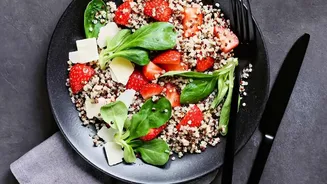
Visual perception also affects how we judge portion sizes and calories. For example, research on the 'portion-size effect' shows that serving food in smaller units can help people better monitor their consumption. When participants were given a 600ml shake in six small cups versus one large cup, they were more aware of how much they were drinking when using the smaller cups. The shape and colour of our tableware also play a role. Studies have found that round, white plates can enhance the perception of sweetness, while black, angular plates may highlight savoury notes. This shows that the context in which food is served is just as important as the food itself, with our brains constantly taking in subtle visual information to make snap judgments about what we are about to eat.
How to Be a More Mindful Eater
Understanding these visual biases is the first step toward overcoming them. The goal isn't to stop appreciating beautiful food, but to make more conscious dietary choices. Firstly, pay attention to ingredients, not just aesthetics. A beautifully arranged pizza is still a pizza. Reading the nutrition label or ingredient list provides objective facts that visuals can't. Secondly, be wary of the 'health halo'. Just because a dish is presented with a side salad or a green garnish doesn't automatically make the entire meal low in calories or fat. Finally, try to slow down. When we eat mindfully, we give our other senses—like taste, smell, and the feeling of fullness—a chance to catch up with our eyes, leading to a more accurate and satisfying eating experience.