

A Star System in Our Backyard
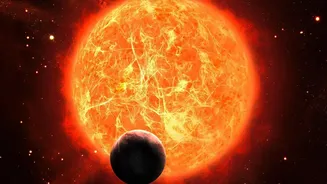
The star Beta Pictoris is one of the most studied objects in the night sky, and for good reason. At only about 23 million years old, it is a mere infant compared to our 4.6-billion-year-old Sun. This youth makes it an invaluable natural laboratory for understanding
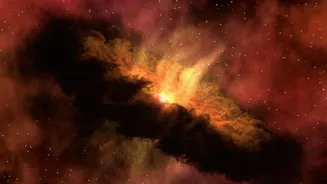
planetary formation. It is surrounded by a vast, bright disc of dust and debris—the leftover raw material from which planets are born. For decades, scientists have peered into this disc, discovering planets and learning about the chaotic dance of early solar system development.
Meet the Planetary Family
Before this latest discovery, Beta Pictoris was already known to host two massive gas giants, Beta Pictoris b and c. Beta Pictoris b was one of the very first exoplanets to be directly photographed, a major achievement in astronomy. Its sibling, Beta Pictoris c, was found using the radial velocity method, which detects the tiny gravitational wobble a planet induces on its star. Together, these two planets offered clues about the system, but astronomers suspected there might be more to the story, particularly a planet lurking further out that could be responsible for shaping the inner edge of the massive debris disc.
The Serendipitous Discovery of 'd'
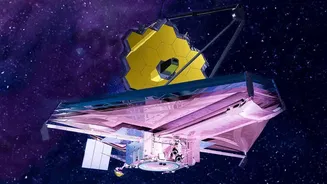
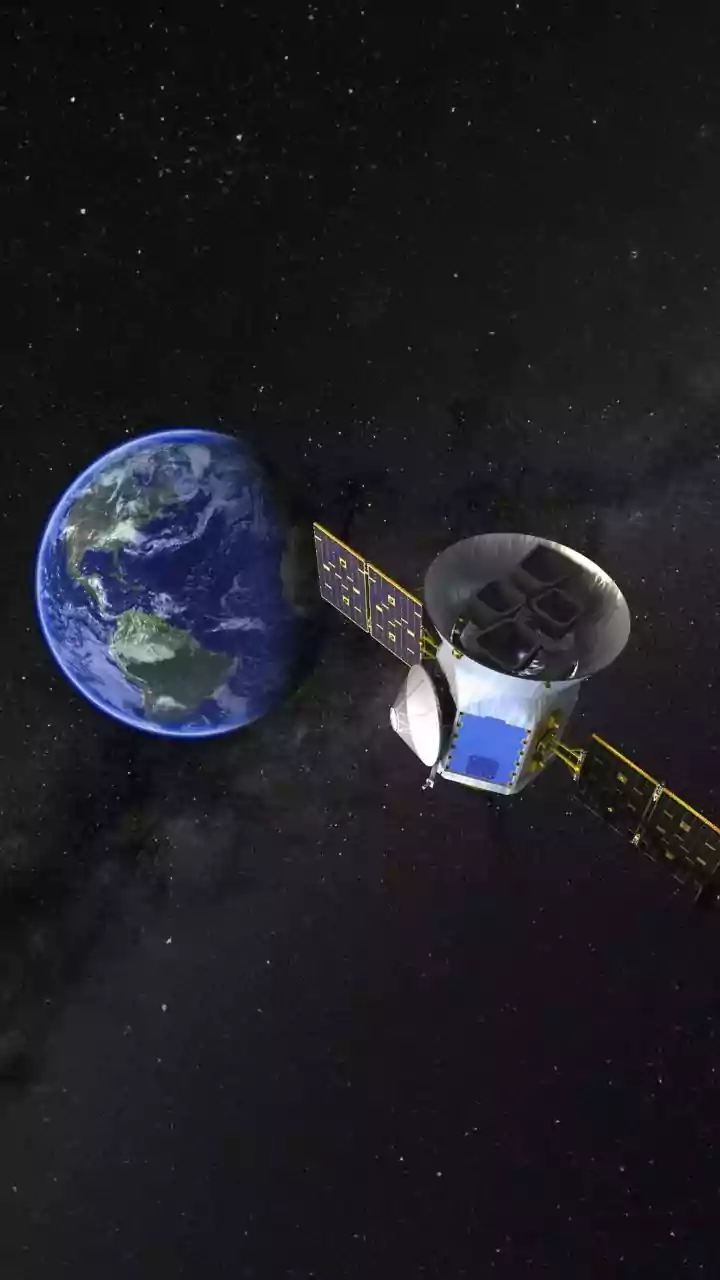
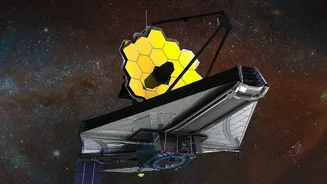
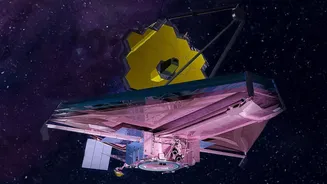
The discovery of the third planet, now named Beta Pictoris d, was a happy accident. Two independent teams of astronomers found it at roughly the same time in 2026. One team was using NASA's James Webb Space Telescope (JWST) to study the atmosphere of the known planet, Beta Pictoris b, when they noticed an unexpected signal in their data. Instead of a bright spot of light, they found the chemical fingerprint of a planet's atmosphere, revealing the presence of methane, carbon monoxide, and water. A second team, using the European Southern Observatory's Very Large Telescope (VLT), also spotted the faint object and, by digging through archival data, realised it had been hiding in plain sight in images for over a decade.
An Orbit Like Neptune's
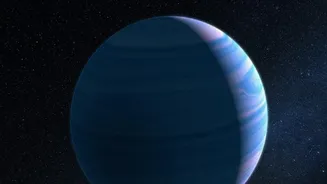
What makes Beta Pictoris d particularly exciting is its vast orbit. Initial models suggest it orbits its star at a distance of about 26 to 30 astronomical units (AU), where one AU is the distance between the Earth and our Sun. This places it in a similar region to where Neptune orbits in our own solar system. This wide orbit is significant because it positions the planet right at the inner edge of the star's sprawling debris disc. Scientists believe that Beta Pictoris d may be the gravitational force responsible for carving out this sharp edge, essentially acting as a cosmic shepherd that clears a path in the dust.
A Trifecta of Giants
With an estimated mass about 2.4 times that of Jupiter, Beta Pictoris d is the least massive of the three known planets in the system. The discovery makes Beta Pictoris only the second star system, after HR 8799, to have more than two planets directly imaged. Having three confirmed planets in the same system provides an unprecedented opportunity for comparative planetology. Scientists can study three different worlds that were all born from the same material at the same time, allowing them to test theories of planetary formation and atmospheric evolution in a single, controlled environment.