







The Expressway Revolution
The most visible change is the explosion of world-class expressways. These are not merely wider highways, but high-speed, access-controlled corridors designed to slash travel times and boost economic activity. The flagship project, the Delhi-Mumbai Expressway,
is a prime example. Once fully operational, this 1,386-kilometre engineering marvel is expected to cut the road journey between India's political and financial capitals from over 24 hours to just 12. This is a game-changer for both passengers and logistics, with projections showing it could save over 320 million litres of fuel annually. Similar projects, like the Mumbai-Nagpur Samruddhi Mahamarg which reduced travel time from 16 to eight hours, and the Bengaluru-Mysuru Expressway which cut a three-hour trip to 75 minutes, are creating a web of rapid road connectivity. This network does more than just speed up travel; it creates economic corridors that foster industrial growth, warehousing, and real estate development in tier-2 and tier-3 cities along their routes.
A Renaissance on the Rails
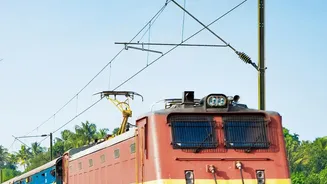
India's railways are undergoing their own dramatic transformation. The introduction of the semi-high-speed Vande Bharat Express trains has redefined inter-city rail travel. With operational speeds up to 160 km/h, these trains are significantly faster than previous services. For instance, the New Delhi-Varanasi Vande Bharat service is about 40-50% faster than the next best train on the route. With dozens of routes now active, and sleeper versions being rolled out, Vande Bharat is making train travel a more attractive and efficient option for medium-distance journeys. Beyond passenger travel, the development of Dedicated Freight Corridors is set to revolutionise logistics by separating goods traffic from passenger trains, allowing for faster, more reliable movement of cargo. Looking ahead, the Mumbai-Ahmedabad High-Speed Rail Corridor, India's first 'bullet train' project, promises to shrink the 508 km journey to just under two hours. With seven more high-speed corridors announced in the 2026-27 Union Budget, the future of Indian rail travel is fast, efficient, and integrated.
Taking Flight from Smaller Towns
The transformation isn't limited to the ground. The UDAN (Ude Desh ka Aam Nagrik) scheme is democratising air travel by developing airports in underserved and unserved regions. Since its launch, the number of operational airports in India has more than doubled, from 74 in 2014 to 165 as of mid-2026. This has brought dozens of smaller cities onto the national aviation map for the first time, making air travel accessible to millions who previously had to travel to major hubs. The government has approved a modified, decade-long UDAN scheme to build on this success, with plans to develop 100 more airports from existing airstrips and 200 modern helipads. Recent announcements, such as plans for four new airports in West Bengal, underscore this continuing commitment to boosting regional connectivity. This expansion allows people to bypass congested road or rail networks for long-distance travel and enables faster movement of people and high-value goods, stimulating local economies.
An Integrated, Multimodal Future
These are not isolated projects but interconnected parts of a larger national strategy. The PM Gati Shakti National Master Plan aims to integrate the planning and implementation of infrastructure projects across all transport ministries. The goal is to create a seamless, multimodal network where expressways connect to airports, and railway stations are linked to logistics parks. For instance, the Delhi-Mumbai Expressway is designed to provide connectivity to airports like Jewar and Navi Mumbai, as well as major ports like JNPT. This integrated approach reduces logistics costs, improves supply chain efficiency, and promotes balanced regional development. By making it easier and cheaper to move goods and people, this new infrastructure is a crucial enabler for India's ambition to become a global manufacturing hub. The recent formation of an Integrated Transport and Logistics Authority (ITLA) further solidifies this approach, ensuring that future planning is coordinated across road, rail, aviation, and shipping for maximum efficiency.