




A Silent Global Alarm
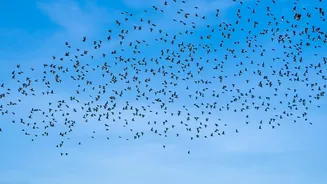
The skies are growing quieter. A comprehensive global review published in mid-2026 has delivered a stark warning: 51% of the world's migratory bird species are experiencing population declines. In contrast, only 10% are showing any increase. This isn't
a distant problem affecting only rare species; it includes once-common birds whose epic journeys connect continents and cultures. The first-ever UN report on the State of the World's Migratory Species highlighted this crisis, noting nearly half of all monitored migratory species are decreasing. These birds are not just beautiful to watch; they are vital indicators of environmental health, performing essential roles like pollination, pest control, and seed dispersal. Their decline signals a much broader ecological imbalance that affects ecosystems worldwide.
The Perilous Journey Home
What is driving these birds towards extinction? The threats are numerous and often interconnected. The primary culprit is the loss and degradation of habitat. Wetlands are drained for agriculture and urban expansion, forests are cleared, and coastlines are developed, leaving birds with nowhere to rest and refuel during their gruelling journeys. Climate change is another major factor, disrupting the delicate timing of migrations and the availability of food sources. Adding to this are direct human-caused threats. Collisions with power lines, buildings, and wind turbines kill millions of birds annually. Pollution, from pesticides in farmlands to plastic waste in wetlands, poisons their food and water. In many regions, unsustainable hunting and trapping continue to decimate populations along their flight paths.
India's Crucial Place on the Map
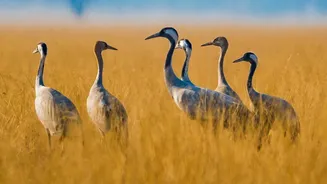
India sits at the very heart of the Central Asian Flyway (CAF), a critical superhighway for birds migrating from their breeding grounds in the Arctic and Central Asia to their wintering homes in South Asia. This makes India an indispensable sanctuary. Iconic sites like Chilika Lake in Odisha, Keoladeo National Park in Rajasthan, and the Harike Wetland in Punjab serve as vital stopover points for millions of birds, including bar-headed geese, demoiselle cranes, and countless shorebirds. The global decline directly impacts the diversity and number of birds arriving on our shores and in our wetlands. The near-disappearance of the Siberian Crane from its Indian wintering grounds is a tragic example of what is at stake. As habitats shrink and degrade along the flyway, the pressure on India's remaining wetlands intensifies, making their protection a matter of international importance.
Local Threats, Global Consequences
While sharing global threats, migratory birds in India face unique local challenges. The rapid expansion of infrastructure, particularly power transmission lines and highways, cuts directly across ancient migratory routes, leading to deadly collisions. The degradation of wetlands due to pollution and encroachment remains a persistent problem. Though legally protected, hunting of migratory birds still occurs in some parts of the country. These pressures add another layer of danger for birds that have already flown thousands of kilometres. The health of these visiting species is a direct reflection of the health of our own environment. When wetlands are poisoned or disappear, it not only harms the birds but also impacts local water security and ecological balance.
A Path to Recovery
Despite the grim outlook, there is still hope. Conservation is a story of resilience, often led by communities that have lived alongside these birds for centuries. In Nagaland, the village of Pangti transformed from a site of mass hunting of Amur falcons into a celebrated conservation success story. India has also launched a National Action Plan for the conservation of migratory birds along the CAF, aiming to protect critical habitats. These efforts are supported by international agreements like the Convention on Migratory Species (CMS), which foster cross-border cooperation. Citizen science platforms like eBird India are also playing a crucial role, empowering ordinary people to contribute to the monitoring and protection of these incredible travellers. Success requires a coordinated effort, from international treaties down to local community action.