




A Fiery, Near-Flawless Ascent
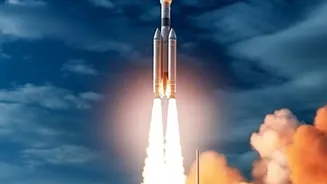
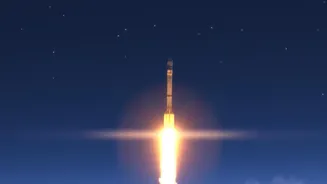
On Monday morning, the colossal Starship vehicle, consisting of the Super Heavy booster and the Starship upper stage, thundered to life at SpaceX's Starbase facility in Texas. This 14th test flight was the first designed to go fully orbital, a significant
jump from previous tests that flew on suborbital paths. While the Super Heavy booster experienced one engine shutting down during its ascent, it successfully completed its burn and performed a controlled splashdown in the Gulf of Mexico. The Starship upper stage also had one of its six engines shut down early, creating a moment of drama. Mission controllers briefly considered keeping the flight suborbital before determining it was healthy enough to proceed, successfully pushing the vehicle into orbit around the Earth.
From Test Vehicle to Workhorse
The most significant milestone of the mission came roughly half an hour after liftoff. For the first time, Starship opened its payload door and began deploying operational satellites. One by one, 26 new-generation Starlink V3 satellites were released into low-Earth orbit using a mechanism often compared to a Pez dispenser. Unlike previous flights that may have carried mockups, this was a revenue-generating mission, delivering valuable hardware to expand SpaceX's satellite internet constellation. SpaceX confirmed that contact was made with all 26 satellites shortly after deployment, meaning the primary goal of the mission was a resounding success.
Why This Leap Matters
This flight marks Starship’s transition from a developmental prototype to a functional launch system. Reaching orbit and deploying a payload are the fundamental requirements for any rocket, and achieving both in a single flight is a monumental step. This success is crucial for SpaceX's business, especially its Starlink division. The new V3 satellites are larger and more powerful, capable of handling 10 times more data than the previous V2 versions. They are too big to launch on SpaceX's workhorse Falcon 9 rocket, making Starship essential for the network's future growth and profitability. Success here validates the enormous investment in the Starship program.
An Early Return and Future Plans
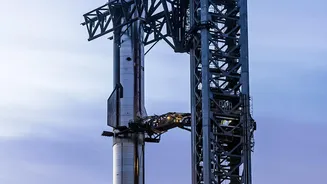
While the mission was originally planned to last for about 10 hours and complete six orbits, SpaceX opted to bring Starship home early out of an abundance of caution following the engine issue during ascent. After about three hours, the spacecraft performed a deorbit burn and began its fiery reentry through the atmosphere, culminating in a targeted splashdown in the Pacific Ocean. This flight, despite being shortened, provided invaluable data. The focus now shifts to increasing the launch pace and moving toward the ultimate goal of full reusability, including catching the Super Heavy booster with the launch tower arms. This success is also a critical step for NASA, which plans to use a version of Starship to land astronauts on the Moon as part of the Artemis program.