

A Cosmic Lion's Roar
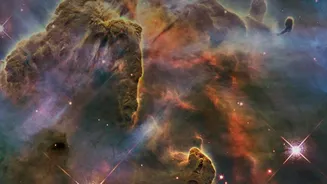
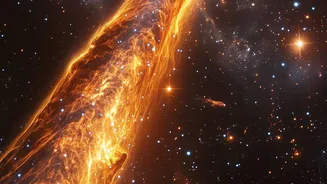
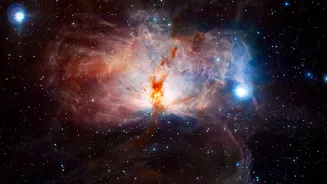
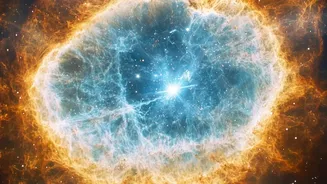
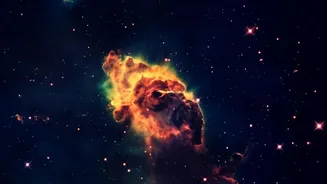
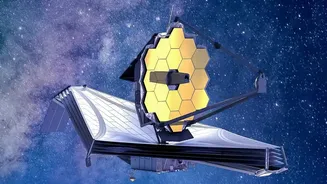
The latest masterpiece from the James Webb Space Telescope (JWST) captures the Lion Nebula, a vast cloud of glowing gas and dust located approximately 10,000 light-years away in the constellation Cepheus. Known to astronomers as Sharpless 2-132 (Sh2-132),
this region is a frenzy of activity. The image reveals intricate filaments of gas, dark lanes of cosmic dust, and the brilliant light of newborn stars, painting a vivid picture of a stellar nursery in action. The nebula gets its name from its resemblance to a lion's flowing mane, and in Webb's new view, this celestial beast appears more majestic than ever. Unlike previous images, Webb's infrared sensitivity cuts through the obscurity, showing the true scale and complexity of this cosmic structure.
Webb's Infrared Superpower
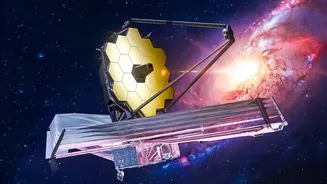
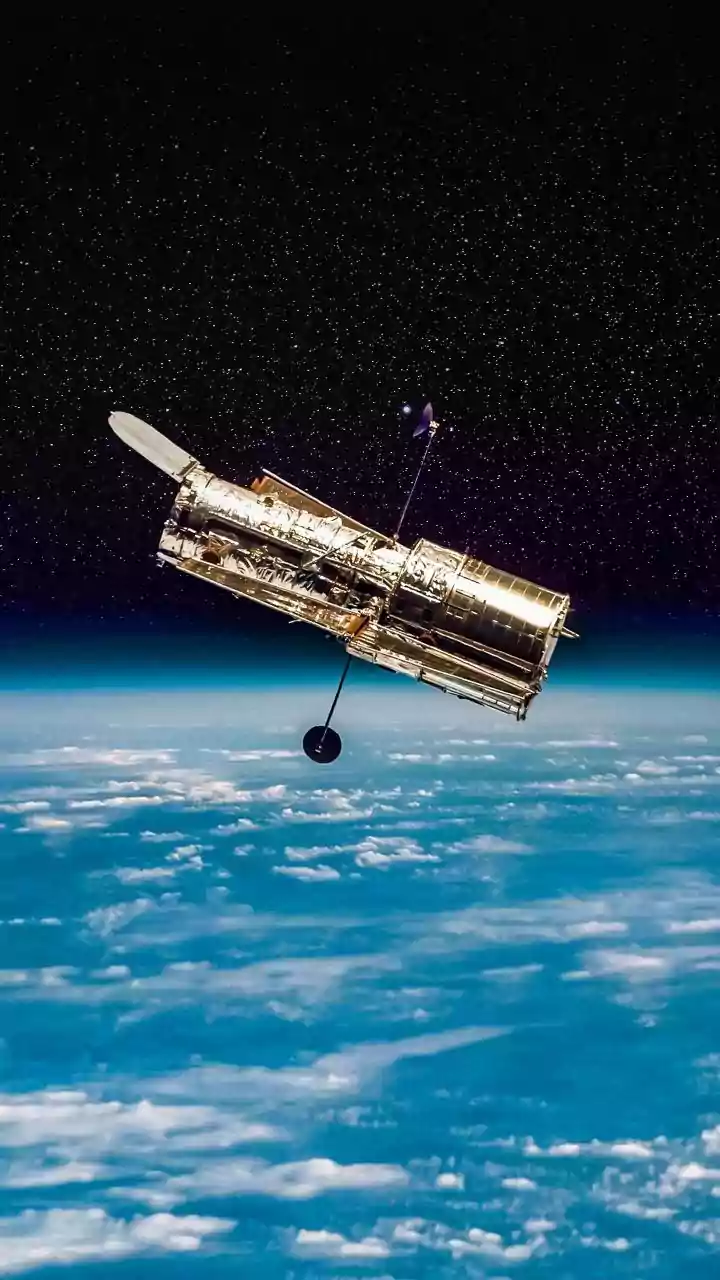
What makes this image a technological game-changer is Webb's ability to see the universe in infrared light. Stellar nurseries like the Lion Nebula are shrouded in dense clouds of dust, which act like a thick fog, blocking the visible light that telescopes like Hubble would detect. This has historically made it difficult for astronomers to observe the earliest stages of star formation hidden within. Webb's instruments, however, are designed to detect the longer wavelengths of infrared light, which can pass through these dusty veils. This capability allows scientists to peer directly into the heart of the nebula, witnessing the birth of stars that were previously concealed. It’s like having a superpower that lets you see through walls, revealing the fundamental processes that build galaxies.
A Laboratory for Star Birth
The Lion Nebula is an active region of star formation, making it a perfect laboratory for studying stellar evolution. At its heart are extremely hot, massive young stars, including two rare and powerful Wolf-Rayet stars. These stellar giants, many times more massive than our Sun, unleash intense ultraviolet radiation and powerful stellar winds. This outflow of energy ionizes the surrounding hydrogen gas, causing it to glow with the characteristic reddish hue seen in many astrophotographs. Webb's new image provides an unparalleled look at how this intense radiation sculpts the surrounding environment, carving out cavities and compressing gas and dust. This compression can, in turn, trigger the collapse of dense pockets of material, leading to the formation of a new generation of stars.
New Clues to an Old Mystery
By piercing the dust, Webb is helping to answer long-standing questions about how stars form and evolve. The detailed view of the Lion Nebula reveals previously unseen protostars—infant stars still gathering mass from their parent cloud. Scientists can now study these fledgling stars and their immediate surroundings with stunning clarity. They can analyze the jets of material being ejected by these young stars, a key phase in their development that helps regulate how much mass they accumulate. This sharper view allows astronomers to test and refine their models of stellar evolution, moving from theoretical predictions to direct observation. The image provides a snapshot of the dynamic interplay between the destructive power of massive stars and the creative process of new star birth co-existing in the same cosmic neighbourhood.