







A Breakthrough 49 Light-Years Away
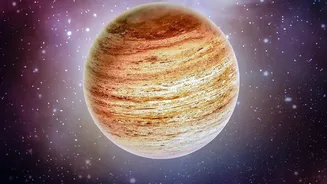
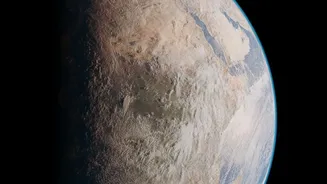
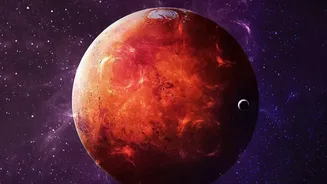
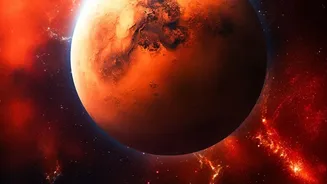
In a major moment for astronomy, scientists have confirmed the existence of an atmosphere around a rocky exoplanet named LHS 1140 b. Located about 49 light-years from Earth, this 'super-Earth' is the first planet of its kind—rocky and located in its star's
habitable zone—to have its atmosphere definitively detected. The breakthrough came not from seeing clouds, but by spotting a faint signal of helium gas escaping from the planet’s upper layers. For scientists, finding this thin, leaking veil of gas is monumental. It proves that a planet like this can hold onto an atmosphere for billions ofyears, a crucial first step in assessing its potential to harbour life.
Why This World is a Scientific Goldmine
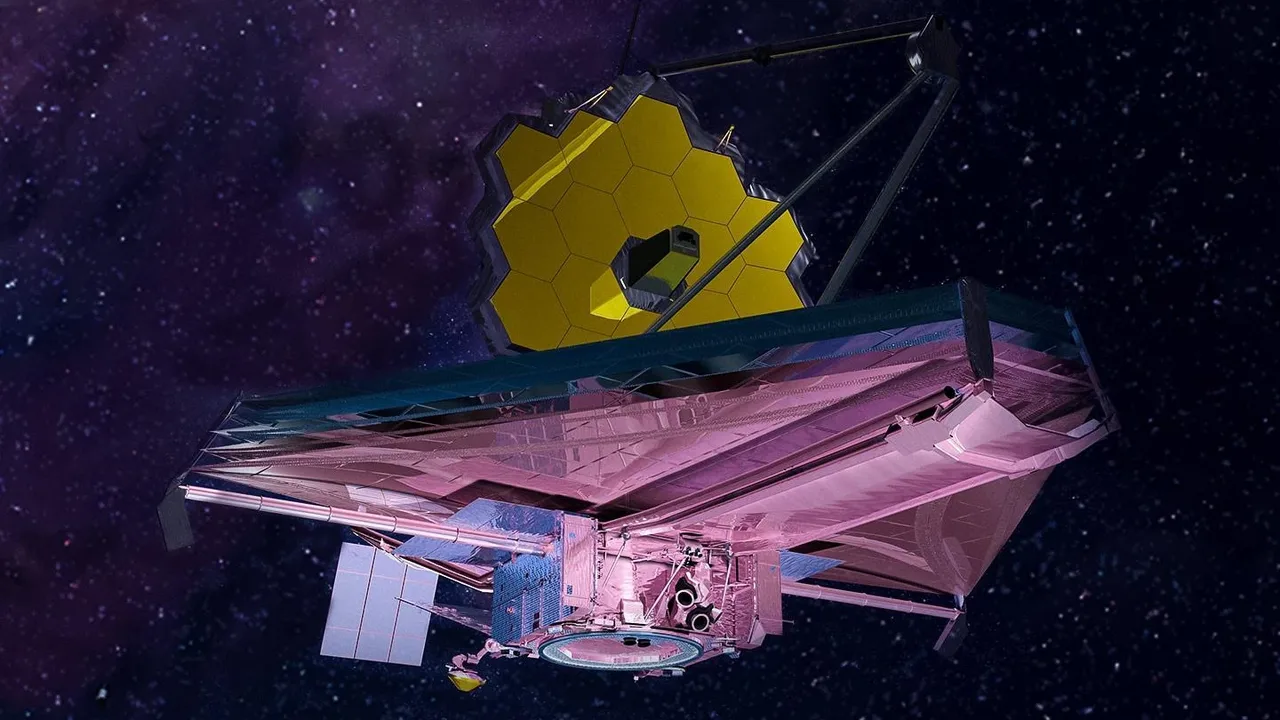
The discovery isn't just a single fact; it's the key to a new laboratory. LHS 1140 b orbits a red dwarf, the most common type of star in our galaxy. These stars are known for being volatile, especially in their youth, often blasting nearby planets with radiation that can strip atmospheres away. The fact that LHS 1140 b has kept its atmosphere suggests that rocky worlds around these common stars aren't all barren, windswept rocks. This makes the planet incredibly valuable. It’s now a prime target for powerful instruments like the James Webb Space Telescope (JWST), which can begin to probe deeper, looking for more complex gases like nitrogen, carbon dioxide, and the holy grail for life as we know it: water vapour. It gives researchers a real-world example to test their theories about how planets form and evolve.
Hold the 'Earth 2.0' Headlines
While the news is exciting, it's important to manage expectations. LHS 1140 b is not Earth’s twin. For starters, it is a 'super-Earth'—about 5.6 times the mass of our planet and 70% larger in diameter. This means surface gravity would be significantly stronger. It orbits its cool, dim star in just 25 days, and it's likely 'tidally locked,' meaning one side perpetually faces the star’s light while the other is in permanent darkness. Furthermore, its composition might be wildly different. Some models suggest it could be an 'ocean world', with up to 10-20% of its total mass being water, compared to Earth's oceans which make up just 0.02% of our planet's mass. While it lies in the 'habitable zone'—the region where temperatures could allow for liquid water—its actual surface conditions remain a profound mystery.
Redefining the Search for Life
Ultimately, the discovery surrounding LHS 1140 b is less about finding a new home and more about refining the search. For decades, finding rocky planets in the habitable zone was the goal. Now, the focus is shifting to which of those planets actually have atmospheres—a prerequisite for surface water and protection from harsh stellar radiation. By confirming an atmosphere on LHS 1140 b, scientists have passed a major milestone. They have proven their detection methods work and shown that stable atmospheres can exist in solar systems very different from our own. This planet is not a destination, but a vital signpost. It tells astronomers where to look next and what to look for, guiding the hunt for life on a more focused and promising path.