








The Scale of the Shift
Recent industry reports paint a dramatic picture of India's electric vehicle future. The EV components market alone is projected to grow more than eightfold, from an estimated ₹41,000 crore in 2025 to around ₹3.55 lakh crore by 2032. This isn't just gradual
growth; it's a compound annual growth rate of 38%, signaling a fundamental restructuring of the automotive industry. This explosion is fueled by rising EV adoption, government localization efforts, and significant investments across the supply chain. It points to a future where India doesn't just use EVs, but becomes a critical hub for building them.
An Engine for Job Creation
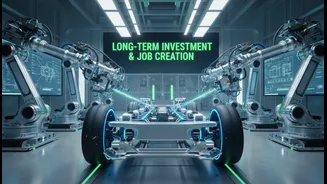
This manufacturing boom translates directly into jobs—and not just on the assembly line. The transition to electric mobility is expected to create hundreds of thousands of new direct and indirect roles. Some estimates suggest the EV sector could generate 500,000 direct jobs by 2030 in fields like manufacturing, R&D, and battery production. An additional 1.5 to 2 million indirect jobs could emerge in charging infrastructure, component supply chains, and digital mobility services. These new roles require a workforce with advanced, specialized skills in areas like power electronics, battery technology, and software integration, representing a significant evolution from traditional automotive jobs.
The Power of Policy
This transformation isn't happening in a vacuum. The Indian government's strategic policies are a key driver. Initiatives like the Production Linked Incentive (PLI) schemes for automobiles, auto components, and Advanced Chemistry Cell (ACC) batteries are designed to boost domestic manufacturing and attract investment. The PLI scheme for the auto sector, with an outlay of nearly ₹26,000 crore, specifically encourages the production of electric and hydrogen fuel vehicles, with a goal of generating 750,000 direct jobs. These programs aim to make India a globally competitive manufacturing hub, reduce import dependency, and build a resilient local supply chain.
Battery at the Heart of the Boom
At the core of the EV story is the battery. Accounting for a huge portion of an EV's cost, domestic battery manufacturing is critical for both affordability and national strategy. The EV components market projection shows battery packs accounting for more than half the market value in 2025. Recognizing this, major investments are flowing into building 'gigafactories' for cell and battery production. Companies like Tata's Agratas Energy Storage and OLA Electric are establishing massive plants, moving to scale up India’s production capacity significantly. This focus on batteries is expected to create a substantial number of jobs, with some projections dedicating 25% of new EV-related roles to battery manufacturing and recycling.
Challenges on the Road Ahead
While the long-term outlook is bright, the path to 2032 has its hurdles. A major challenge is localization. India remains heavily dependent on imports for critical items like battery cells and power semiconductors. Increasing domestic production, or indigenisation, is crucial to capturing the full economic value of the EV transition. Another significant challenge is the workforce itself. The shift from internal combustion engines (ICE) to EVs requires a massive reskilling effort to equip workers with the necessary software, electronics, and automation skills. Furthermore, the rollout of a comprehensive and reliable charging infrastructure network remains a critical factor for supporting the projected growth in the EV fleet.