





The Puzzle of a Dying Planet
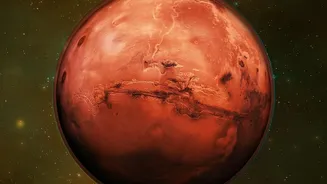
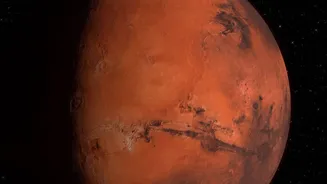
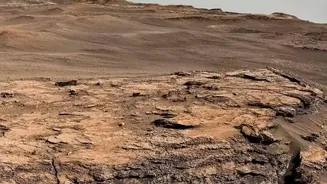
For decades, scientists have tried to reconcile two conflicting pictures of Mars. On one hand, orbiters and rovers have sent back undeniable proof of a watery past: vast outflow channels, dried-up lakebeds, and minerals that only form in water. NASA's
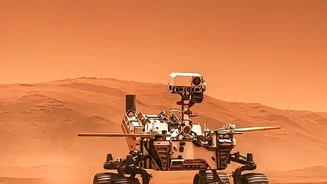
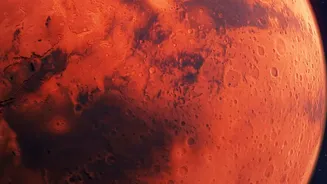
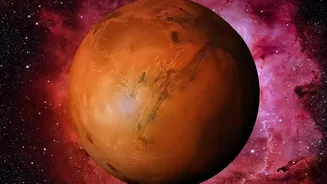
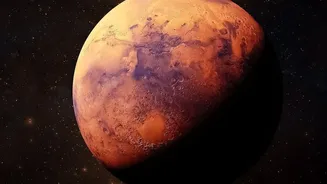
Curiosity rover even found evidence of a vigorous ancient streambed. Yet, on the other hand, we know Mars is a geological lightweight. Being smaller than Earth, its molten core cooled and solidified much earlier, causing its global magnetic field to shut down around four billion years ago. Without this protective shield, the fierce solar wind stripped away the planet's atmosphere and boiled off its surface water, turning it into the desolate world we see today. This created a major timing problem: how could a planet that lost its protection so early have sustained liquid water long enough for life to potentially emerge?
A Planetary Umbrella
The conventional wisdom was that once the global dynamo died, Mars's fate was sealed. But that story never quite explained some of the lingering mysteries, like the strange patches of intensely magnetized crust in the southern hemisphere. A new interior model provides a fascinating alternative. Instead of a short-lived global shield, what if Mars had a long-lasting, localized one? The new theory posits the existence of a single, massive mantle plume — a giant upwelling of hot rock rising from the planet's core. Think of it like a colossal, slow-motion bubble in a planetary-sized lava lamp. This plume, active for hundreds of millions of years, would have been hot enough to generate its own powerful magnetic field over a large portion of one hemisphere. It wouldn't be a global shield, but more like a giant magnetic umbrella.
Connecting the Dots
This "mantle plume" theory elegantly explains several observations. It accounts for the strong, patchy magnetic fields detected in the southern highlands, suggesting these were the areas huddled under the magnetic umbrella. It also provides a powerful heat source that could have fueled prolonged volcanic activity. This volcanism would have released gases to help thicken the atmosphere and also created hydrothermal systems — vents of hot, mineral-rich water. On Earth, such systems are teeming with life, making them prime targets in the search for ancient Martian biosignatures. The model essentially redraws the map of ancient Mars, suggesting it wasn't uniformly habitable, but had a long-lasting habitable zone concentrated in one region.
A New Roadmap for Finding Life
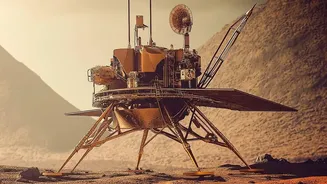
The implications for future exploration are immense. Rather than searching for needles in a planet-sized haystack, this model gives scientists a much more specific area to target. Future missions, whether robotic or human, can focus on the regions that would have been protected by this plume-powered magnetic field. We now understand that the window for habitability on Mars might have been open for much longer than previously believed, but perhaps only in this specific, shielded region. Research from rovers like Perseverance and Curiosity has already shown that the building blocks of life, complex organic molecules, were present. This new model provides the context for how they could have been protected long enough for something more to happen. The search isn't just for signs of past water anymore, but for signs of life in a place that had persistent, long-term protection.