






The Global Matcha Phenomenon
Once reserved for traditional Japanese tea ceremonies, matcha has exploded into a mainstream global ingredient. Its appeal is multi-faceted: health-conscious consumers are drawn to its high antioxidant content, while its vibrant colour and versatility
make it a favourite in cafes and on social media. This boom has turned matcha into a significant economic force. The global market was valued at over $5 billion in 2025 and is projected to continue its strong growth. This surging demand, primarily from North America and Europe, has made matcha the undeniable centre of gravity for Japan's tea export industry, accounting for nearly 70% of green tea exports in fiscal year 2025.
A Tale of Two Teas
The international success of matcha stands in stark contrast to the fate of other Japanese teas. Domestically, the consumption of traditional steeped green teas like sencha—for decades the most popular tea in Japan—is declining. Japan's population is aging, and younger generations often prefer coffee or bottled beverages. This has created a difficult situation for farmers: the local market for their traditional product is shrinking, while a lucrative global market beckons for a different type of tea. The economic incentive is powerful. In 2025, the price for tencha, the raw leaf used to make matcha, was about six times higher than the previous year, motivating many to make a change.
The Great Pivot in the Fields
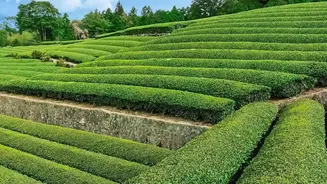
In response, a massive shift is underway in Japan's tea-growing regions like Shizuoka, Kagoshima, and Uji. Farmers are increasingly converting their fields from sencha to tencha cultivation. This is not a simple change. Tencha production is more complex and labour-intensive. Tea bushes must be shaded from sunlight for several weeks before harvest to increase their chlorophyll and L-theanine content, which gives matcha its characteristic umami flavour and bright green colour. This requires significant investment in shading infrastructure. The Japanese government has even stepped in, offering subsidies to help farmers purchase the necessary equipment to make the switch.
Tradition Meets Technology
To meet the surging demand, producers are blending age-old techniques with modern technology. While traditional stone mills, which can only grind about 30-40 grams of matcha per hour, are still used for the highest ceremonial grades, manufacturers are adopting more efficient machinery. Innovations include advanced steam-withering machines to lock in colour, automated air-separation equipment to remove stems and veins with precision, and new far-infrared drying ovens that improve aroma and consistency. Some farms even use drones and sensor-based irrigation to monitor crop health and optimize growing conditions, ensuring high quality at a larger scale.
The Risks of Going All-In on Green
This rapid transition is not without its challenges. The pivot to tencha is a costly, multi-year investment that is largely irreversible without another substantial cash outlay, creating a risk if the matcha boom ever cools. The focus on a single crop also threatens the diversity of Japan's tea culture, with unique regional teas disappearing as land is converted for matcha. Furthermore, the boom has created a shortage of sencha, driving up prices for this domestic staple. With an aging farmer population and a shortage of successors to take over family farms, the industry is struggling to keep up, facing bottlenecks in labour, land, and processing capacity.