



Two Different Jobs, Two Different Rulebooks
It’s a common point of confusion for many savers. The RBI announces a change in its policy rates, and investors wonder how it impacts their FD returns and the tax they pay on them. The simple answer is that these two financial levers are controlled by
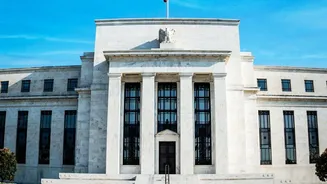
different bodies for different purposes. The RBI’s Monetary Policy Committee (MPC) manages monetary policy, using tools like the repo rate to control inflation and ensure economic stability. Its primary goal is managing the money supply in the economy. On the other hand, tax policy—including how your FD interest is taxed—is the domain of the Government of India, specifically the Ministry of Finance, and is laid out in the Income Tax Act. Think of it this way: the RBI decides the temperature of the economic climate, while the government sets the rules for the financial game you play.
The RBI's Ripple Effect on FD Rates
The RBI's decisions do have an indirect but significant effect on your FDs. The policy repo rate is the rate at which the central bank lends money to commercial banks. When the RBI changes this rate, it affects the cost of funds for banks. For instance, a cut in the repo rate means banks can borrow more cheaply from the RBI. Consequently, banks may pass on this benefit by lowering lending rates for loans but also by reducing the interest rates they offer on new fixed deposits. Conversely, when the RBI hikes the repo rate to fight inflation, banks often raise their FD rates to attract more deposits. As of the latest meeting on August 5, 2026, the RBI's MPC decided to keep the repo rate unchanged at 5.25%, signaling a period of stability for borrowing costs and deposit rates. Importantly, any change in a bank's FD rate only applies to new deposits or those renewed after the change; the rate on your existing FD remains locked in until maturity.
How Your FD Interest Is Actually Taxed
Regardless of what the RBI does, the taxation of your FD interest follows a consistent set of rules laid out by the Income Tax Act. The interest you earn is considered 'Income from Other Sources' and is added to your total annual income. It is then taxed according to the income tax slab you fall under. This means there is no special, separate tax rate for FD interest; it’s taxed just like most of your other income. It’s also crucial to remember that this applies even to tax-saving FDs under Section 80C. While the principal amount (up to ₹1.5 lakh) is eligible for a deduction, the interest earned on these FDs is fully taxable.
Decoding TDS on Your Deposits
Another layer to this is Tax Deducted at Source, or TDS. This is not the final tax but an advance tax collected by the bank on behalf of the government. Banks are required to deduct TDS at a rate of 10% if the total interest earned on all your FDs with that specific bank exceeds a certain threshold in a financial year. For the financial year 2026-27, this threshold is ₹50,000 for general citizens and ₹1,00,000 for senior citizens (aged 60 and above). If your PAN is not linked, the TDS rate doubles to 20%. If TDS is deducted but your total income is below the taxable limit, you can claim a refund when you file your Income Tax Return (ITR). Alternatively, if you are eligible, you can submit Form 121 (which replaced Forms 15G/15H from April 1, 2026) to the bank at the start of the financial year to prevent any TDS deduction.