


From 'Last' to 'First' Village
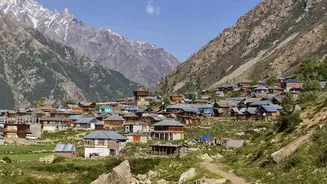
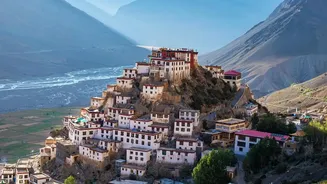
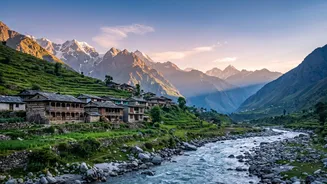
Tucked away in Uttarakhand’s Chamoli district, near the Badrinath shrine and the border with China, Mana has long held a special place in the travel lexicon as 'India's last village'. Recently, however, the Border Roads Organisation (BRO) installed a new
signboard that officially re-christened it the 'First Indian Village'. This seemingly simple change in terminology is part of a significant shift in national policy. It reframes border settlements not as remote outposts, but as the country's frontline gateways. The move, championed by the Prime Minister, aims to instill a sense of pride and importance, but more concretely, it serves as the public face of a broad strategy to develop remote border areas, with tourism as a central pillar.
The Vibrant Villages Programme
The rebranding of Mana is directly linked to the Centre's 'Vibrant Villages Programme' (VVP). This is a centrally sponsored scheme designed to comprehensively develop villages along India's northern borders in states like Uttarakhand, Himachal Pradesh, and Arunachal Pradesh. The core objective is to improve the quality of life for residents and, crucially, to reverse out-migration from these strategic areas by creating sustainable livelihood opportunities. With an initial outlay of ₹4,800 crore, the programme focuses on improving road and digital connectivity, housing, reliable energy, and promoting tourism. For villages like Mana, this means targeted investment in infrastructure—such as all-weather roads, community centres, and better visitor facilities—to transform them into viable tourist destinations. The idea is that economically vibrant and populated border areas are also a strategic asset for the nation.
The Promise of Economic Growth
For local communities, the push for tourism brings the promise of economic revival. In Mana, which has a population of around a few hundred families, traditional crafts like weaving and agriculture have been the mainstays. The increased tourist footfall, which has already seen a spike since the 'First Village' announcement, creates new avenues for income. The development includes converting homes into homestays, opening shops, and creating a market for local products. The government's plans have included developing museums, renovating traditional houses, and improving trekking routes to nearby attractions. For many residents, this initiative is a welcome change, bringing opportunities that could help improve their quality of life and encourage younger generations to stay rather than migrate to cities in search of work.
The Peril of Overtourism
However, the development rush in the geologically fragile Himalayas is a double-edged sword. Environmental experts and activists have long warned about the dangers of unregulated tourism in the region. A surge in visitors inevitably leads to increased pressure on scarce resources like water, greater waste generation (especially single-use plastics), and air and noise pollution from vehicles. Haphazard construction of hotels and roads on steep slopes can lead to soil erosion, increasing the risk of landslides, a common hazard in the Himalayas. Reports indicate that the Himalayan region already accumulates nearly 50,000 metric tons of waste annually from tourism, and popular zones have seen significant declines in forest cover. The challenge, therefore, is to ensure that the infrastructure boom doesn't lead to irreversible ecological damage, turning these pristine villages into overcrowded, polluted hotspots.
Finding a Sustainable Path Forward
Mana's development is now a crucial test case for the future of Himalayan tourism. The key lies in finding a balance between economic aspirations and ecological responsibility. This involves implementing and enforcing principles of sustainable and eco-friendly tourism. Initiatives could include promoting community-based tourism where locals have direct control and benefit, implementing strict waste management protocols, capping the daily number of tourists, and encouraging low-impact activities like nature walks and cultural immersion over resource-intensive ones. Several villages in Uttarakhand are already being recognized for their eco-tourism models, focusing on homestays run by women and promoting local culture. If Mana can successfully adopt such a model, it could provide a blueprint for the hundreds of other villages slated for development under the Vibrant Villages Programme, ensuring that growth does not come at the cost of the very environment that draws people to the Himalayas in the first place.