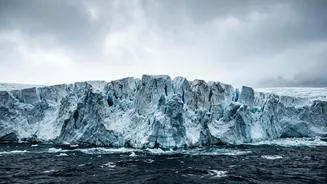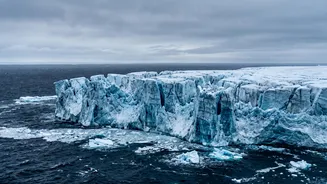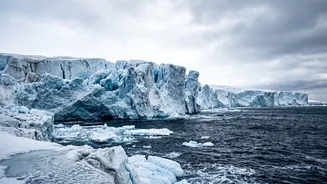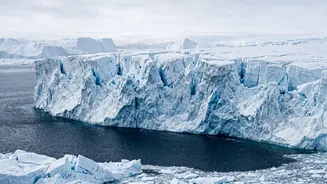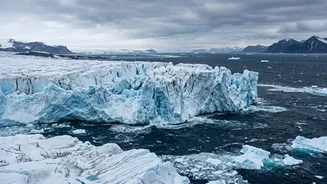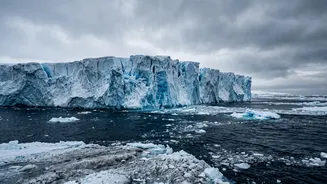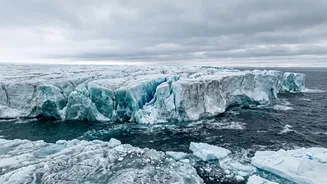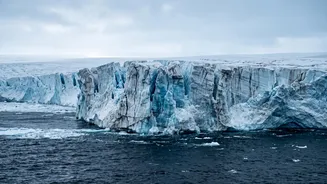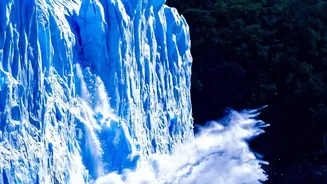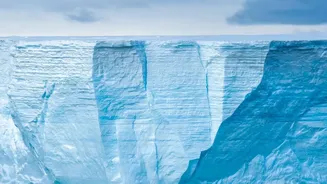





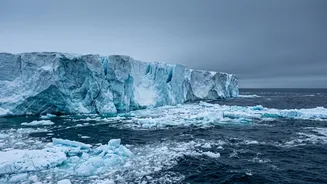
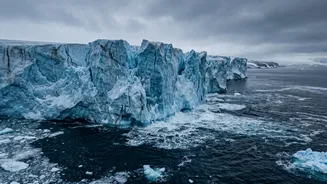
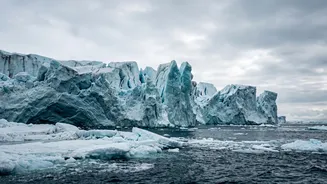
In West Antarctica sits a colossal river of ice roughly the size of Great Britain, nicknamed the 'Doomsday Glacier'. Its real name is Thwaites, and new research has just doubled its projected contribution to sea level rise by the end of the century.
The 'Doomsday' Nickname Explained
Thwaites
earned its ominous moniker for a simple reason: its collapse would have catastrophic consequences for global coastlines. It currently contributes about 4% of the world's annual sea level rise, shedding 50 billion tons of ice each year. If the entire glacier were to melt, it holds enough ice to raise sea levels by over two feet (65 cm). But the immediate danger isn't just Thwaites itself. It acts like a cork in a bottle, holding back the rest of the vast West Antarctic Ice Sheet. Scientists believe its collapse could trigger a chain reaction, eventually leading to a sea level rise of around 10 feet, which would inundate coastal communities worldwide.
A Doubling of Projections
For years, scientists have worked to predict how quickly Thwaites might retreat. But a recent study published in October 2026 has provided a worrying update. Using a sophisticated new model, researchers from NASA and the University of California, Irvine, found that Thwaites could contribute up to 30 millimetres (1.2 inches) to global sea levels by 2100. This figure is double the previous estimates, even without accounting for any future global warming. The new projections don't necessarily mean the entire glacier will collapse this century, but they do show that its contribution to rising seas is more aggressive and rapid than earlier models suggested.
The Science Behind the Revision
So what changed? The breakthrough comes from a better understanding of what happens where the glacier meets the sea. Previously, models treated this 'grounding line' as a distinct and stable boundary. However, new satellite data revealed a more complex reality: a 'grounding zone', several kilometres wide, where warm ocean water gets channelled deep underneath the glacier. This creates what scientists call a 'tidal pumping' mechanism, where tides lift the ice and allow warm, salty seawater to cause vigorous melting far from the edge. By incorporating this grounding zone into their models, the researchers found their simulations matched the glacier's actual retreat since the 1990s four times more accurately than older models.
Why This Matters for India
A melting glacier thousands of kilometres away can feel like a distant problem, but its effects are global. For India, with its long and densely populated coastline, the stakes are incredibly high. Rising seas threaten to displace communities, increase the frequency and severity of coastal flooding, and contaminate freshwater sources with saltwater. Major cities like Mumbai, Kolkata, and Chennai are particularly vulnerable. Reports already indicate that India faces significant risks, with coastal erosion affecting a third of its shoreline. The revised projections for Thwaites provide a clearer, more urgent picture for policymakers, reinforcing the need to bolster coastal defences and plan for a future with higher seas.