


What Exactly Happened?
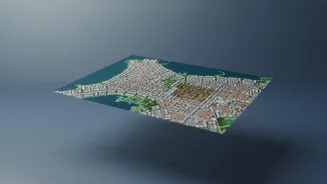
In late July 2026, Google launched an exciting new feature in Google Earth: an AI tool that allowed users to generate photorealistic images on top of its satellite maps. The idea was to let people visualise anything from historical scenes to future architectural
plans. Users could zoom to a location, type a prompt like “a futuristic city here,” and watch the AI create it. However, the feature was pulled in less than 24 hours. Researchers and online intelligence experts quickly demonstrated how the tool could be used to create convincing but completely fake satellite imagery of sensitive scenarios, such as bomb craters on hospitals, refugee movements, or military sites. Recognising the immense potential for misuse and misinformation, Google quickly rolled back the feature, stating it needed to implement stronger safeguards.
The Garbage In, Garbage Out Problem
The Google Earth incident wasn't just about a single feature; it exposed a fundamental challenge with AI: its relationship with source data. AI models, including those that generate images and maps, are not truly intelligent. They are advanced pattern-recognition engines trained on vast amounts of data from the internet. They don't 'understand' geography or physics; they predict what a result should look like based on statistically similar examples they have seen before. This is why AI can 'hallucinate,' producing answers that seem confident but are factually wrong. It might create a map with incorrect borders, place landmarks in the wrong city, or even invent non-existent countries because its training data was flawed, incomplete, or misinterpreted. The polished, authoritative look of AI-generated content makes this especially dangerous, as it's easy to assume that if it looks right, it must be right.
Beyond Maps: A Universal AI Challenge
This problem extends far beyond mapping. We've seen similar issues with AI making up legal cases, giving dangerous advice, or generating historically inaccurate images, like racially diverse Nazi soldiers. In many cases, AI overviews for reverse image searches have incorrectly described what an image shows, sometimes repeating false claims from social media instead of debunking them. For instance, AI has misidentified video game footage as real-life conflict and failed to recognise its own company's watermark designed to label AI-generated content. This creates a crisis of trust. When we can no longer reliably use a reverse image search to determine an image's origin or authenticity, one of the most powerful fact-checking tools for journalists and the public is compromised. The very tools meant to help us find truth can inadvertently amplify fiction.
How You Can Check Your Sources
In this environment, digital literacy is no longer optional. We must all become more critical consumers of visual information. The first step is to cultivate a healthy sense of skepticism, especially with images that evoke a strong emotional reaction. Look for small, tell-tale signs of AI generation: strange-looking hands or text, repeating patterns, or a waxy, overly smooth appearance. Use reverse image search tools like Google Lens or TinEye, but be critical of the results. Instead of just trusting an AI-generated summary, look at the actual source links to see where the image has appeared before. Is it from a reputable news site, a personal blog, or a known purveyor of satire? Tools specifically designed as AI image detectors are also becoming more common and can offer another layer of analysis. By cross-referencing information and prioritising original, credible sources, you can build a more reliable picture of reality.